Showing posts with label cavalry. Show all posts

Friday, May 15, 2020

The Tragic Death of Major General John Austin Wharton

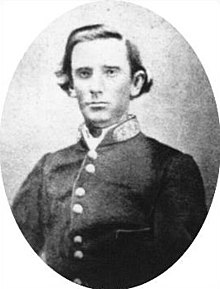
JAWharton.jpg

Major General John A. Wharton

       Most people don't understand why people in the South are considered so much more respectful than Northerners. There is a reason for this and it goes way back beyond the Civil War. In the South, there was a code of honor among gentlemen. If you insulted a man, you may find yourself challenged to a duel. I've already written a blog on dueling in the old South if you'd like to read it. http://trrcobb.blogspot.com/2013/05/antebellum-dueling.html There were rules that were supposed to be followed. I read an article a couple of years ago about newspaper editors in the antebellum South. You'll have to forgive my memory, but I remember being amazed at the number of times the average editor was challenged to a duel during his lifetime for something printed in his paper. 
       The most famous duel of the war is the one that occurred between Missouri Major General John S. Marmaduke and Tennessee Brigadier General Lucius Marshall Walker near Little Rock, Arkansas. Marmaduke accused Walker of cowardice and they met at dawn one morning despite orders to refrain from dueling. When it was over, Walker lay dead, never to be called a coward again. The other famous duel of the war occurred earlier in the war when Major Alfred Rhett killed his commanding officer Colonel William R. Calhoun (nephew of John C. Calhoun). 
       Major Wharton wouldn't have the opportunity to defend himself in a duel. Born in Nashville, Tennessee, the Wharton family moved to Texas while he was young. He was described as a "red-haired, freckle-faced boy." John Wharton graduated from the University of South Carolina in 1850. While in that state, he married the daughter of Governor David Johnson. Upon graduation, Wharton returned to Texas where he practiced law. He soon made enough money to purchase a plantation. He was a strong supporter of secession. 
       When the war began, he and other Texans headed to Richmond, Virginia. They saw action at Manasass (Bull Run), but Wharton was sick and missed the battle. He then became a captain in the 8th Texas Cavalry. The unit became known as "Terry's Texas Rangers". Colonel Benjamin F. Terry was mortally wounded at Rowlett's Station and his successor Thomas S. Lubbock became sick and died. John was promoted to colonel of the regiment. 
       At Shiloh, Wharton was wounded, yet he refused to leave the field. He remained in command and helped cover the retreat of the army to Corinth. General William J. Hardee called him "the gallant Wharton." This praise helped stoke the fires of military ambition in Colonel Wharton. He was then placed under command of Bedford Forrest and fought in an engagement at Murfreesboro on July 13, 1862. Forrest commended him for moving forward at the head of his command. He was severely wounded in this assault.
       Wharton recovered in time to lead his regiment during Bragg's Kentucky invasion. He had a horse shot from beneath him at Bardstown and at Perryville he was praised for leading one of the greatest charges of the war. Because of this, he was promoted to brigadier general on November 18, 1862. 
       John Wharton received command of a two-thousand man brigade and joined Joseph Wheeler's cavalry. He was praised by Wheeler and received promotion to major general on November 10, 1863. He continued to serve under Wheeler in the action around Chattanooga. Rumors began to circulate that Wharton was a superior general to Wheeler. These rumors soon reached Wheeler's ears and Wheeler immediately began to complain to General Joseph Johnston about his subordinate. Wheeler stated that ambition had turned Wharton into a "frontier political trickster." 
       Johnston understood something must be done to retain peace among his commanders. Wharton had applied to President Jefferson Davis for a transfer to the Trans-Mississippi (area west of the Mississippi River) and Johnston realized this would solve his problem. Wharton was ordered to report to Edmund Kirby Smith in Texas.
       He arrived there in the spring of 1864 and when General Thomas Green was killed at Blair's Landing, he took command of Richard Taylor's cavalry in Louisiana. Taylor praised his performance, but the Trans-Mississippi didn't receive the attention of the army's east of the river. He soon applied for a return to Johnston's army in Georgia. That transfer regrettably would never occur and John Wharton would die as a result. 
       Fellow Texan Colonel George Wythe Baylor (brother of Colonel John R. Baylor the famed Indian fighter) and John Wharton would have problems. Baylor had served on General Albert Sidney Johnston's staff at Shiloh. Both men were ardent Texans devoted to the Confederate cause. Deep down, they were very different men. Baylor was a self-made man who'd worked hard all his life for what he'd obtained. Wharton was born to wealth and education. More trouble was brewing than just their backgrounds.
       The first incident between the two men occurred when Colonel Baylor on furlough applied for an extension because of his wife's ill health. Wharton had denied the furlough writing, "I know nothing of Mrs. Baylor's health. Colonel Baylor is needed with his regiment." Baylor believed that Wharton was calling him a liar to have his furlough extended. 
       Most people saw Wharton as a future politician careful to look for future votes. Like a true politician, most felt he took care of his friends at the expense of others. General John B. Magruder placed Baylor's cavalry under Wharton's command and soon after asked Wharton for troops to serve as dismounted cavalry. Wharton immediately sent him Baylor's men. This infuriated Baylor. According to Baylor (he'd been commanding a cavalry brigade for some time), Wharton had promised him a promotion to brigadier general and now was forcing him to serve under a lower ranking officer as infantry. For Baylor, it was just too much. 

 In the Confederacy's Last Days, Two Texans Face Off in Futile Feud

Colonel George Wythe Baylor

       The sad part of the episode is the fact that Baylor was placed under a general who wasn't able to take the field which basically ensured him an independent command. Wharton probably saw it in this light. Baylor's pride was hurt and that fact didn't make him feel any better. In his defense, by this point of the war, Baylor was himself in poor health. He'd been suffering from dysentery and had lost a lot of weight. Despite standing six feet, two inches he weighed less than 140 pounds. His brother John R. Baylor was known for his fiery temper and Baylor probably wasn't much better. 
       Wharton didn't help the situation with his language. He was famous for cursing when speaking to his subordinates and talking harshly when he did address them. Things were quickly coming to a climax between the two men. On the morning of April 6, 1865 (just three days before Lee surrendered at Appomattox), both General Wharton and General James Harrison came riding into Houston in a carriage to visit their superior officer Major General John B. Magruder. 
      Colonel Baylor was in town that morning attempting to enlist the help of General Walter Paye Lane in getting his orders countermanded. Lane refused to get involved (especially after the reports of the way Wharton talked to his subordinates). Having failed to receive any help from Lane, Baylor strolled through town with Captain Sorrel. Wharton, riding in the carriage spotted Baylor and dressed him down for being absent from his command. It had to be an embarrassing moment for Baylor being "chewed out" in front of Captain Sorrel and General Harrison. Baylor informed Wharton that it was imperative that he be in Houston to have his men removed from the situation they were in or they would all desert. He then told Wharton he was going to see Magruder to complain about Wharton. The situation began to escalate and both men's voices began to rise. Wharton demanded to know when he'd ever treated Baylor unfairly. Baylor named several instances that in his mind were mistreatment. 
       Wharton called Baylor a "damned liar." In the old South calling someone a liar was just asking to be challenged to a duel. Baylor then called Wharton a "liar" and stepped toward the buggy with his hand raised. General Harrison shocked at the escalating situation nudged the horse forward. Baylor shouted, "Stop the buggy, sir!" Harrison ignored him. The buggy continued down the street with Baylor still shouting at Wharton. 
       Later that afternoon, Wharton and Harrison arrived at Magruder's hotel room to find his commander absent, but Colonel Baylor sitting on his bed awaiting his return. Wharton began to shout at Baylor about his earlier insubordination. Harrison attempted to intervene, but things were out of control. Wharton struck Baylor in the face (Baylor claimed he was punched with a fist, but some say it was an open-handed slap) before Baylor drew his revolver. Harrison was still attempting to get both men under control when Baylor fired under his outstretched arm hitting Wharton in the chest. Wharton was dead when he hit the floor. General Harrison then grabbed Baylor and said, "Colonel, he was totally unarmed!" Baylor simply turned and left the building. He would never be punished. 
       Unlike in a duel, Baylor had killed an unarmed man. In that time period, this would be construed almost like an act of cowardice. Wharton was 36 years old and rests today in the Texas State Cemetery, Austin, Texas. George Baylor would become a post-war Texas Ranger, writer, and serve in the Texas state legislature. He died on March 24, 1916 and rests today in the Confederate Cemetery, San Antonio, Texas. He was 83 years old. Baylor claimed that he regretted killing General Wharton for the remainder of his life calling it a "lifelong sorrow." Those closest to Baylor reported that he couldn't mention the entire affair without coming to tears. He stated, "I trust everyone who knows me personally will believe me when I say the whole thing was a matter of sorrow and regret to me." Baylor is remembered as a military commander as "a courageous individual fighter...lacked reserve, was a poor disciplinarian, and an indifferent judge of men." Both men are remembered for their fearlessness in combat. Wharton is remembered as a fine combat commander. 
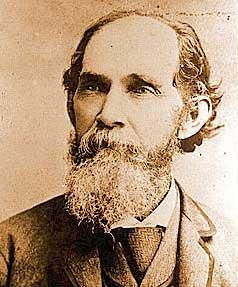
Col George Wythe Baylor (1832-1916) - Find A Grave Memorial

George W. Baylor later in life

Sunday, June 17, 2018

Year of Glory by Monte Akers: An Excellent Book


Major General J.E.B. Stuart

       I just finished reading the book Year of Glory by Monte Akers. The book deals with Jeb Stuart's military career from June 1862 to June 1863. I'll be the first to admit that I've never been a very big Jeb Stuart fan, but Monte's book has since changed my mind. I couldn't put the book down. I even read several parts of the book to my wife and she said, "He was your clone."
       Working on the railroad I earned the nickname "Instigator" because of pulling pranks and jokes on people and enjoying a good laugh. Jeb was much the same way. This book is full of funny stories about some of Jeb's funnier moments. I'd always read how Jeb was seeking personal attention when he left Lee's Army blind in Pennsylvania during the Gettysburg Campaign. Monte Akers helps explain how and why things occurred the way they did. He doesn't do like most biographers and attempt to make his subject sinless, but points out that Stuart was human and prone to make mistakes. The book is a great read and I highly recommend it. I could hardly put it down and there is a part two to this book that I'm already in the process of purchasing. Book two covers from Gettysburg until Stuart's death and if it's half as good as this book, it will be a great book. 
       There are several interesting stories and many are commical, especially the story of a Prussian staff officer sitting on a wet painting, but there was one story that particularly interested me. In the chapter on Chancellorsville, Stuart and his staff camped beside a barn that served as a field hospital for Federal soldiers. The Prussian volunteer staff officer named Scheibert made a note of the difference in wounded Confederate soldiers and wounded Federal soldiers. According to Scheibert, Confederate soldiers considered it a disgrace to groan aloud when they were wounded, but suffered stoically in silence. He said a person could tell if the hospital was Federal or Confederate by the sounds. Scheibert mentioned meeting a captain walking to the rear during a battle with his hat covering one hand. Scheibert asked the captain if he was severely wounded, there being a great deal of blood on the officer's uniform. The captain replied, "No, only the hand is gone." Scheibert went on to mention other instances to back his claims that Southern soldiers took wounds with little complaint while the Federal soldiers groaned and cried aloud. 
       I'm not trying to say Southerner's are tougher or stronger than Federal soldiers. It was the Southern ideal of honor and bravery that made them act in such a manner even when they understood their wound was mortal. According to the book Attack and Die by Grady McWhiney and Perry Jamieson all of this was a direct result of Southerner's ancestry. The descendants of the Celtic people mostly settled in the South. The Celt's were a warring people. Take that and have part of the population intermarrying Native American's and you have yourself a perfect fighting machine. 
       Again, I highly recommend Year of Glory by Monte Akers. I have come away with a completely different view of Major General Jeb Stuart and now I must have the next book.
       

Thursday, August 10, 2017

A Lack of Cavalry

A Lack of Cavalry: Understanding Why Some Armies Were Better Than Others


Image result for battle of brandy station

Great Cavalry Battle of the Civil War

       It makes for great reading and greater imagination when we think about the great cavalry battle's of the American Civil War. In truth, there were very few. Of course Brandy Station was the largest cavalry battle ever fought on the North American continent and the clash at Gettysburg on the third day was dramatic indeed. Yet, fighting mounted battles was not what the cavalry arm was designed to do. As General Robert E. Lee referred to his cavalry arm under Jeb Stuart and later Wade Hampton, the job of cavalry was to be the eyes and ears of the army. The lack of cavalry could mean the success or failure of a campaign. It has been argued that the lack of Stuart's cavalry at Gettysburg led to the defeat of Lee's army in Pennsylvania. Just before that campaign, the lack of cavalry led to the utter defeat of Joe Hooker at Chancellorsville. Yet, it becomes far deeper than just the success or loss of two battles. 
       The Confederate army in the west (Army of Tennessee) never had a commander that understood how to properly use cavalry. Only General Lee in Virginia used his cavalry to effect. He didn't ask them to make great raids, engage in serious battle as infantry did, but only to keep him informed of the whereabouts of the enemy. That didn't occur in Sidney Johnston's army before Shiloh, Beauregard's army following Shiloh, or Bragg's army in Kentucky. An excellent example would be a portion of Bragg's army engaged at Perryville, Kentucky against all of Buell's army, yet despite Joe Wheeler covering his left flank, Bragg finished that battle not realizing he faced a superior Union army. Wheeler did do good service covering Bragg's retreat back into Tennessee, but you still wonder what could have been had Wheeler kept Bragg informed of what he faced.
       When McDowell arrived at Manassas during the summer of 1861, he complained because the Federal government wouldn't allow volunteer cavalry to be recruited. He had to find his enemy using his own staff and this of course proved a failure. When Lee took over the Army of Northern Virginia, he sent Stuart's cavalry around Federal General McClellan's right flank to see if it was vulnerable. McClellan didn't have the cavalry to defend this move and ended up in the dark as Lee swept down on his undefended right flank and drove him away from Richmond. 
       The lack of cavalry continued to haunt the Union high command until the Battle of Gettysburg, where they made a stand in the absence of Stuart's cavalry and helped turn the tide of war. Following Gettysburg, Stuart would remain the eyes and ears of Lee's army and keep the famed Confederate general abreast of what the Federal army under Ulysses Grant had planned. Despite the lesson learned by the Union army at Gettysburg, Grant would overrule Meade and send the Army of the Potomac's own cavalry off on raids that accomplished very little, when they could have been a big help to Meade in his flank movements. The war could have been over a year earlier. Yet, Meade and the Army of the Potomac would blindly disengage Lee and attempt to flank him, only to find him waiting for Meade after each movement because of the inadequacies of "Little Phil" Sheridan. Sheridan wouldn't prove any useful service until the last year of the war and after the loss of manpower in the Confederate army. 
       Let's look at a few Cavalrymen of that war and rate them according to how they did their jobs, not according to how legends have painted them. 


Major General James Ewell Brown "Jeb" Stuart

       I can already hear the Bedford Forrest fans screaming for my head, but I have to rank Jeb Stuart at the top of the list of Civil War cavalrymen. Stuart understood his job as cavalryman. He understood that his sole job was to provide his army commander with information about the enemy. Did Stuart always do his job? No. But, he did it better than any other cavalryman in the North or South and that's the reason I've ranked him the best cavalryman of the war.


Lieutenant General Nathan Bedford Forrest

       One of the best commanders of the war, Nathan Bedford Forrest is not the best cavalry commander in my opinion. My buddy Jerry Smith proclaims Forrest as the greatest general of the war and of course I can't blame him. Jerry has at least two grandfathers who fought under Forrest. Yet, I consider Forrest more of a commander of Mounted Infantry than cavalry. Of course, another friend Jay Gregory says that once a bullet whistles by your head, you all become infantry. That's true, but the difference between cavalry and infantry in those days had to do with what your job was. Cavalry was technically providing intelligence to the overall commander (Forrest didn't do that because he was busy arguing with his commander). He served as cavalry in the Chickamauga Campaign and during the Nashville Campaign at the end of the war, other than that, he served as a commander of his own independent army (Mounted Infantry). 


Image result for phil sheridan

Major General Phil Sheridan

       Another overrated cavalryman in my opinion is Phil Sheridan. Sheridan spent the first half of the war as an infantryman. He moved up to cavalry command in the Army of the Potomac because of his service under Ulysses Grant in one battle. He arrived in Virginia and because his cavalry blocked the road of the infantry between the Wilderness and Spotsylvania, he and Meade clashed. Sheridan proclaimed he could destroy Stuart's cavalry if given his freedom and Grant granted his request. He then made a raid that succeeded in killing Jeb Stuart and little else. He arrived in southeastern Virginia having left Meade's army blind and without cavalry and groping blindly across Virginia in the Overland Campaign. 


Major General Joseph Wheeler

       Another overrated cavalryman in my book is Joseph Wheeler. His troopers always lacked for discipline under his command. He was supposed to serve as Bragg's intelligence gathering cavalry during the Kentucky Campaign of 1862, yet he accomplished nothing. During the Atlanta Campaign, John Bell Hood sent Wheeler to destroy the railroad between Sherman's army and Chattanooga, yet he rode all the way to Knoxville and out of the theater of operations. 
       Not a lot of cavalrymen understood their roles in the War Between the States. Wade Hampton became a fine cavalryman following the death of Jeb Stuart. Fitzhugh Lee became a descent cavalryman despite his failure at Five Forks in 1865. Turner Ashby was a fine partisan ranger, but failed Stonewall Jackson as a cavalryman during the Shenandoah Valley Campaign of 1862. A book could be written on the effectiveness of cavalry during the Civil War, but this is just a blog. 


Wednesday, March 13, 2013

A Confederate General named Grumble


William Edmundson "Grumble" Jones

       Among the many Confederate generals I admire, one of my favorites is Brigadier General William Edmundson Jones who earned the nickname "Grumble." William Jones was born in Washington County, Virginia in 1824. He graduated from West Point ranked 10th out of 38 members of the class of 1848. His ranking in conduct wasn't nearly so high. 
       Following graduation, William served in the old army without seeing any combat. In 1852, he was granted a furlough, returned home to Virginia and married Eliza Dunn. As they were traveling back to his post on the west coast, they boarded a ship in New Orleans. The boat sank off the coast of Texas. William attempted to save Eliza but she was swept from his arms and drowned. Following her death one man noted that Jones seemed to take pleasure in pain as if he was doing penance for something he had done wrong. Perhaps he blamed himself for his wife's death. Still grieving and tired of the boredom of a peace time army, Jones resigned his commission in 1857 and settled down to his plantation in Virginia. 


Jones while still serving in the U.S. Army sometime before 1857

       He led Company D, 1st Virginia Cavalry at the Battle of Manassas as a captain. When the regiment's commander J.E.B. Stuart was promoted to brigadier general, William was promoted to colonel. The troopers of the 1st Virginia didn't like William as well as they had J.E.B. Stuart. Thus would start a bitter hatred between Jones and Stuart that would last until the two officers deaths. During the regimental election in 1862, the 1st Virginia Cavalry would vote William out as commander. He would then take over the 7th Virginia Cavalry. The units he worked with were lose in discipline, but Jones soon whipped them into effective soldiers. 
       Jones would dress as his men. One man wrote that he wore an old homespun suit, wore a yellow hat that matched his old yellow mare. He wore no insignia of his rank. One soldier said he looked like a tramp on horseback. His men didn't love him because of the discipline he instilled, but they did respect him. He had earned the nickname "Grumble" because of his irritable disposition and the loss of his wife had made him even more irascible. Though he was a close friend to Stonewall Jackson, there were few others he befriended. J.E.B. Stuart's staff officers took the brunt of his rage. 
       Because of his actions in battle at Cedar Mountain, Stonewall Jackson insisted Jones be promoted to brigadier general. His men also learned that Grumble was a good commander in combat and he gained more respect. In late 1862, Stuart complained to General Lee about Jones and attempted to have him replaced. He claimed that in all his dealings with Jones, he found the man defiant and insubordinate. 
       He led a raid in early 1863 that was a total failure, but rebounded to go on a spring raid with  his and Brigadier General John D. Imboden's brigade which saw success. Imboden said Grumble was a hard fighter, brave as a lion, but he was a man of high temper, morose and fretful. 
       Jones continued to lead his men until June of 1864. There at the Battle of Piedmont his small force faced over 12,000 Federal troops. The numbers in Jones's command have been reported from 2000 to 5000 men. During the fight, Jones was shot in the head and killed. His small force was then severely defeated. His body was carried back to Glade Spring, Virginia and buried next to that of his wife. 


The marker near the spot where Grumble was killed

       Grumble Jones was 40 years old. 


Grave of Grumble Jones


Tuesday, January 8, 2013

Thunderbolt: The Mystery of John Hunt Morgan


John Hunt Morgan

       Did Confederate Brigadier General John Hunt Morgan die in the War Between the States? Believe it or not, there are those that believe he escaped death in Kentucky and lived under an alias the rest of his life. So what is the story of the death of General Morgan?
       

Williams House in Greeneville, Kentucky

       On September 4, 1864, General Morgan spent the night in the widow Catherine Williams home in Greeneville, Tennessee. She was a distant relative of his wife Martha Ready. He spread his troops too thin to guard the approaches into town and only had his staff with him at the home. Because it was raining, he allowed his headquarters guard stay inside the house. All of this would cost him his life. A teenager named Jimmy Leady rode sixteen miles to the camp of Federal General Alvan Gillem and informed him where Morgan was staying the night. 
       The next night, Gillem's forces surprised Morgan and two companies began to surround the house in an attempt to capture him. General Morgan sprang from bed, pulled on a pair of Federal cavalry pants and some slippers. He was wearing a white muslin shirt. He grabbed his belt and holsters and raced downstairs. With a Colt revolver in each hand, he told Mrs. Williams  goodbye and stated, "The Yankee's will never take me a prisoner again."
       

Morgan was asleep in this bed just moments before his death

       Morgan and some of his staff raced through the garden and hid beneath Saint James Episcopal Church. He handed one of his pistols to Captain James Rogers of his staff and asked him to assist him in making their escape. Rogers informed Morgan that it was useless as they were surrounded. Morgan replied, "We must do it if possible." 
       When the Federals broke the door open and began to search the church, Morgan and his staff ran into Mrs. Williams vineyard and hid. Morgan's troops attempted to rescue him several times but were driven back by the Federals. Mrs. David Fry spotted Morgan in the vineyard and  informed the Federals of his location. Federal soldiers arrived on the scene and Morgan was soon surrounded. 
      "Don't shoot; I surrender!" Morgan yelled. The Federals began to scream, "Kill him! Kill him!" General Morgan threw up his hands and screamed, "Oh my God!" The Federal soldiers then opened fire. A bullet struck him in the back and passed through his heart. Death was instant. The man credited with killing Morgan was Private Andrew Campbell of the 13th Tennessee Union Cavalry. He then shouted, "I have killed the damned horse thief."
       Campbell took the body to the edge of town and threw it into a ditch full of water. The local Unionist soon arrived and began to dance around the body. They soon stripped Morgan's body down to his underwear. When members of Morgan's staff asked General Gillem not to treat Morgan's remains like that of a dog, Gillem replied, "Aye Sir, and it shall lie there and rot like a dog!"
       Later, Captain Rogers and another staff officer were allowed to retrieve the body and carry it back to Mrs. Williams house. They had to have a Federal cavalry escort because the mob dancing around the body refused to let them have the body. His body was embalmed and they found one bullet wound. His face had been scratched from the mistreatment by the Federals and the mob. 


Michael Grissom's book

       I was reading about Morgan's death not long ago when I remembered a story I'd read in the book Southern By The Grace Of God by Michael Andrew Grissom. I'd read this book in the early nineties, but still remember this particular story because it made such an impression on  my mind. 
       While in Oklahoma, Mr. Grissom was attempting to organize a local Sons of Confederate Veterans camp. One fellow claimed to be a direct descendant of General John Hunt Morgan. The story goes that on the morning when Morgan was surprised there was much confusion. It is true there was quite a bit of confusion that foggy damp morning. Morgan was supposed to have swapped coats with a staff officer that morning. Although hit in the side, Morgan managed to escape, but his staff officer was killed. He eventually made his way north to Illinois to find a lady named Maggie Critzer who he'd met before the war. 
       Reaching Maggie, he changed his name to John Hunt Cole, married the lady and together they lived with her family. Several men recognized Cole as John Hunt Morgan and a fight was started. Morgan killed two of the men. Having been discovered alive, he took Maggie and fled to Kansas. They later moved to Missouri where Maggie died in 1879. Cole then married Carolyn Reardion. Cole began to practice medicine and it was noted what an excellent shot he was with a pistol. 
       In 1892, Cole moved into Indian Territory (present day Oklahoma) and a visitor would often arrive after dark. The man would visit Cole until just before daylight when he would again leave town. According to Cole's descendant's, this man was General Morgan's brother. In 1899, Cole came down with pneumonia and believing he was about to die, he told his son John Morgan Cole and his wife Carolyn who he really was. When his son asked him why he hadn't admitted this before since there was no longer any danger of him being sent to prison, Cole replied that he was still legally married to Mattie Ready of Tennessee and it would also bring dishonor to his family. 
       The story is rather long and adds a lot of evidence to suggest that John Hunt Cole was really John Hunt Morgan. One coincidence is the tombstone of Cole. His birth date is the same as John Hunt Morgan's, only the death dates are different of course. 


Tombstone of John Hunt Cole

       Also, there is a photograph of John Hunt Cole as an older gentleman. Many people say the two men look alike. Of course, claiming to be someone famous back in those days was quite common. There were numerous men who claimed to have been John Wilkes Booth and there's even a mummy of one of these men in a private collector's possession today. Brushy Bill Roberts swore that he was actually Billy the Kidd. There were rumors that Jesse James was not shot by Robert Ford, but escaped, remarried and had children long after he was supposedly dead. There are actually people today that claim to be descendants of John Wilkes Booth, but the son or daughter of Booth was born long after the war and his death. The Cole/Morgan story does have some convincing arguments. 


Are these the same men?


Tuesday, April 26, 2011

Dewitt Smith Jobe: A horrible death


Private Dewitt Smith Jobe

       Dewitt Smith Jobe was born in Rutherford County, Tennessee in 1840. In 1861, when the war began, Jobe joined Company D, 20th Tennessee Infantry Regiment. His cousin was the lieutenant colonel of the regiment, Thomas Benton Smith who would rise to the rank of brigadier general and eventually meet his own sad end. He had another cousin and namesake in the 45th Tennessee Infantry Regiment named Dewitt Smith who would become famous for avenging his cousins death. 
       Dewitt Smith Jobe was wounded in his first action at the Battle of Mill Springs, Kentucky and captured there. He would be exchanged in time to see action at the Battle of Murfreesboro. When Braxton Bragg began to retreat from Middle Tennessee, Dewitt Smith Jobe was chosen to serve in Coleman's Scouts along with another cousin named Samuel Davis. Davis became known as the 'Boy Hero of the Confederacy'. You can read his blog in my archives of January 7, 2011.
       

Sam Davis

       As a scout, Dewitt understood that he faced a more dangerous job than just serving as an infantry private in the Confederate Army. If he were captured he could be sentenced to be hanged. His cousin Sam Davis had been hanged in Pulaski, Tennessee in 1863 because he refused to provide information to the Federals when he was captured. 
       Dewitt Smith Jobe was operating behind Federal lines near Triune, Tennessee on August 29, 1864 and had just had breakfast with a relative. He was travelling by night and sleeping by day to avoid Federal patrols. He refused to stay at the house for fear his relatives would be punished if he was found sleeping there. He moved to a nearby cornfield to get some rest. Unknown to him, a Federal cavalryman had spotted him through a telescope and moved in with a squad of the 115th Ohio Cavalry. 
       As the 15 man patrol approached Dewitt, he tore up his dispatches, chewed and swallowed them. This seemed to anger the Federal patrol, who would later be reported as intoxicated. They demanded to know what the dispatch contained and who they were meant for. Like his cousin Sam Davis, a year earlier, Dewitt refused to betray his country. 
       The Ohio cavalrymen tied his hands behind his back and took a rein from one of their horses and strangled Dewitt in an attempt to get him to talk. Yet, he still refused. They then struck him over and over with a pistol, knocking out his front teeth. He was helpless and bleeding  but still refused to provide the Federal soldiers with information. 
       They screamed and yelled as they continued enjoying their torture of the young man. Neighbors nearby could hear the delight in their voices. They then decided if he wouldn't talk, they would gouge his eyes out. Still the brave young man refused to talk. They then decided to cut his tongue out. After cutting his tongue out, they decided to put the boy out of his misery. They tied a rope around his neck and attached it to a horse and dragged the young man to his death. 
       The members of the 115th Ohio Cavalry were never punished for their crimes. Legend states that the sergeant in charge of the patrol went mad after sobering up. Some members of the regiment were killed when the Sultana sank after the war returning them from Andersonville Prisoner of War Camp in Georgia.
       This wouldn't be the end of retribution for the horrible act. Dewitt's Jobe's cousin Dee Smith is said to have lost his mind in rage when he heard the news. He left Hood's Confederate Army and raised the black flag against Federal troops. He would take no prisoners. He would slit the throats of 14 Federal soldiers in their sleep near Murfreesboro, Tennessee in revenge and kill nearly 50 more before he was wounded and captured. The Federal's planned to hang the wounded prisoner the next day, but Dewitt Smith would die before the scheduled time. 


Grave of Dewitt Smith Jobe

       Dewitt Smith Jobe was 24 years old. The Federal soldiers who killed him later stated that he was the bravest man they'd ever met. His fiance found his body and placed a handkerchief over his face. Old Frank, a servant on the Jobe plantation placed Jobe's body in a wagon, tears streaming down his cheeks. He would be carried back to his home in Brookhill, Tennessee and buried there. 


Carved Sentinel at Jobe's Grave


Jobe's Confederate Medal of Honor

       Legend carried down from that time state that the place where these horrible things occurred to Dewitt Smith Jobe is haunted. People traveling by have reported having an eerie feeling at the place. Regardless, Dewitt Smith Jobe was one of the bravest men who ever lived.