Saturday, August 27, 2011

Excerpt from my upcoming book "Die Like Men": Shy's Hill action at Nashville


Me standing at the spot where the following occurred 

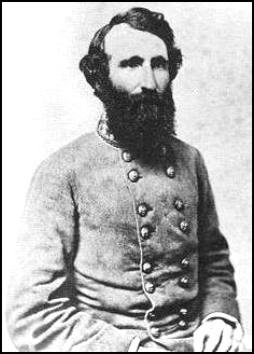
      Brigadier General Thomas Benton Smith was young, just twenty-six years old. He was a striking man, tall and attractive to the ladies. He thought about Tod Carter, his assistant quartermaster who’d been killed back at Franklin. Tod had always kidded him about sharing a few ladies with him.
          Like General Gordon, who’d been captured at Franklin, Smith had graduated from the Nashville Military Institute. He’d become a railroad conductor after graduation. People just didn’t seem to understand that he liked to ride trains.
          The rain was coming down in torrents now. Like his men, he was cold, tired, and hungry. They’d gotten little sleep last night. At the moment, Smith was frustrated over his position. They’d been placed here in the dark on the crest of this hill. Instead of being on the military crest, they were on the actual crest itself. What all this meant was, when the Federals advanced, they couldn’t fire on them until they came over the ledge just twenty yards in front of his position. This situation made his line extremely weak.


Brigadier General Thomas Benton Smith

       He had cannons, but they couldn’t depress their muzzles to fire on the advancing Yankees until they were on top of them. It wasn’t his fault either, but that wasn’t any consolation to him at the moment. Ector’s Texans had occupied the position in the dark last evening. They hadn’t even bothered to throw up breastworks or place abatis in front of the lines. His brigade had been brought up here later in the night, and they’d had to dig all night to be prepared. By the time it had gotten to be daylight, he realized the fragility of his situation, but by then it was too late. Bate had instructed him to throw up breastworks. He had told Smith that the entire position of the army may rest on his brigade on top of this hill.
          The ground had been frozen last night and made the digging difficult. To add to the problem, he had very few picks and shovels. Most of his men were forced to dig with their bayonets. Others would sneak out into the dark and gather branches and logs. They threw anything that would stop a bullet into their breastworks. Rocks were piled up and covered over with dirt. All night long he had listened to the enemy voices in the cool night air near the base of the hill. He could see their fires through the trees.
          His adjutant, Captain Jones, and James Cooper, one of his aides, walked up. Cooper said, “Sir, a six-foot man could get within twenty feet of our works, and we wouldn’t know it.”
          Captain Jones added, “This is the poorest position we’ve ever been placed in.”
          “I agree,” Smith replied, “but it’s too late to change our dispositions now, gentlemen.”
          “That’s not all the good news, sir,” Cooper jerked a thumb over his shoulder toward the rear. “Cheatham has ordered off Ector’s brigade. That’s the only reserves we have, and we keep stretching the line left. We ain’t much more than a skirmish line now.”
          Smith shook his head, making no reply.
          Cooper added. “I’m sure, when darkness gets here, we’ll be ordered to retreat. By the sound in our rear, we may already be surrounded.”


Major General William Brimage Bate

       He looked to his right and noticed how thin Finley’s Florida brigade had become. Ector’s Texas brigade had been pulled out of line about an hour ago to go face Wilson’s cavalry on some knoll in their rear. He and Strahl’s old brigade had been forced to extend their already thin lines to cover the gap Ector’s men left behind. He thought about poor old Otho Strahl. He was a good man. He’ll be severely missed. Strahl’s brigade and Smith’s were all Tennesseans fighting for their homes.
          By the sound of the firing behind him, he wondered if his brigade would see any fighting at all. It was becoming unnerving. The Federal cavalry was definitely getting in their rear, and he began to wonder if they wouldn’t be forced to surrender without a fight. The firing in rear of their position soon stopped. He wished he knew what was happening.
          Suddenly, Thomas Smith’s world erupted in flame and smoke. Federal batteries to the west and north of the hill all opened fire at once. It felt as though they were concentrating their fire on Smith’s one brigade. It probably felt that way to everyone on the hill. With that much artillery being poured on this hill, it could only mean one thing—an infantry assault was coming.


Wednesday, August 24, 2011

Confederate General Killed by D.U.I.?

William Edwin Baldwin

Brigadier General William Edwin Baldwin

Confederate Brigadier General William Edwin Baldwin was born in 1827 in South Carolina. He moved with his family at an early age to Columbus, Mississippi and that is where he would call home. As an adult, Baldwin owned a book store and served in a local militia company. He served as an officer in that company for twelve years. 
When the Civil War began, he was made captain and the company became a part of the 14th Mississippi Infantry Regiment. The regiment was assigned to Pensacola, Florida where Baldwin became colonel commanding the regiment. He would soon be sent to Cumberland Gap and placed in charge of a brigade. 
From there he was sent to Fort Donelson, Tennessee where he was placed in command of a brigade of Tennessee and Mississippi Infantry. His brigade led the breakout attempt there and he was commended for his courageous leadership. He was surrendered there with the rest of the fort and held prisoner of war for six months. 
After being exchanged, Baldwin was promoted to brigadier general and sent to Mississippi. His brigade fought at the Battle of Port Gibson. During the siege of Vicksburg, Baldwin was wounded, but was soon back in command of his men. When Pemberton approached all his officers looking for support in surrendering his command, he received approval from all but one man. That man was William Baldwin who voted to hold out to the last man. 
Baldwin was exchanged and sent to Mobile where he took command of a garrison of sixteen-hundred men. It was here that Baldwin would meet an early death. Although, many disagree as to what happened, we know that he died from a fall from his horse. It was reported that a stirrup broke and the fall resulted in his death. 
As with all of history things are a little murky. Rumors were soon being spread that Baldwin had been intoxicated and riding his horse at high speed when he fell from the saddle. Many believe the story was changed to a broken stirrup in an attempt to save the man’s reputation. 
Regardless of whether the rumors are true or not, William Edwin Baldwin was a brave officer and hero of the Civil War. Everyone makes mistakes and this should have no impact on the man’s war record. 
William Edwin Baldwin was 36 years old. Initially buried in Mobile, he would be re-interred in Friendship Cemetery, Columbus, Mississippi where he rests today. 


Resting place of General Baldwin

Sunday, July 31, 2011

William Booth Taliaferro: The man who couldn't destroy a Stonewall


William Booth Taliaferro

William Booth Taliaferro (pronounced Tah-liver), was born in 1822 in Virginia.  The man came from a very prominent family.  He was the nephew of James A. Seddon, who would become a Confederate Secretary of War.  He earned a degree at William and Mary College and then attended Harvard Law School.  He would work as an attorney until the Mexican War began.  He then joined the Eleventh United States Infantry where he was made a captain.  He would eventually be promoted to major before he was mustered out following the war.  Taliaferro would then serve in the Virginia House of Delegates and became a major general in the Virginia State Militia.  

When the Civil War began, Taliaferro would be made colonel of the Twenty-third Virginia Infantry Regiment.  The unit would see action at Rich Mountain and Corrick's Ford under Robert S. Garnett (Garnett would be the first general killed during the war at Corrick's Ford).  He was soon commanding a brigade consisting of Georgia, Arkansas and Virginia Infantry.  His subordinates hated him because he was a very strict disciplinarian.  He was assaulted by a drunken Georgia soldier under his command on one occasion.  


A young Taliaferro before the war

He also proved to be a thorn in the side of his superiors.  He and William Loring petitioned Richmond to remove "Stonewall" Jackson from command in January of 1862.  Though they both failed, Taliaferro was promoted to brigadier general.  Jackson protested the promotion, but at the same time appreciated Taliaferro's devotion to discipline.  Though neither man liked the other personally, they managed to serve together during the Valley Campaign and Seven Days battle's around Richmond.  

At Cedar Mountain, when General Charles Winder was killed, Jackson gave Taliaferro  command of the division.  He would command the division at the Battle of Groveton where he would be severely wounded.  The man would be absent recovering for three months.  He again commanded the division at the Battle of Fredericksburg where they were held in reserve, yet still suffered a slight wound.  Taliaferro felt he had earned a promotion to major general by this point.  He became frustrated thinking Jackson was blocking his promotion.  He would ask and be granted a transfer, both men happy to be rid of the other.  


Another wartime view of Taliaferro

Taliaferro was sent to General Beauregard in Charleston, South Carolina.  Beauregard placed the man in command of Battery Wagner, a sand fort located on Morris Island.  Taliaferro and his thirteen hundred man command endured a week of heavy shelling from Federal gunboats.  Following the bombardment, over 5,000 Federal infantry assaulted the fort.  The assault would fail, the Union army losing over 1400 men including Colonel Robert Gould Shaw, while Taliaferro's force lost less than 200.  


Colonel Robert Gould Shaw

Colonel Shaw was the son of a prominent Boston family and led the Fifty-fourth Massachusetts Colored Infantry.  The Confederate government considered leading black troops against Southern forces to be inciting servile insurrection.  Also, during that time in American history, it was a disgrace for a white man to be buried in the same area as a black man.  When Shaw's father wrote the Confederate commanders at Charleston a request for the body of his son, the reply was, "We buried him with his niggers."  It is still argued today who exactly replied to Shaw's father. Some say it was Taliaferro, others claim it was General Trappier, while still others claim it was an unnamed Confederate major.  Regardless, it was meant as an insult.

Battery Wagner would never fall, despite being bombarded for another sixty days, it would eventually be abandoned for lack of supplies.  A month following the battle, Beauregard removed Talaiferro from command at Battery Wagner and placed him in command of an infantry division on James Island.  He would command a division for the remainder of the war, but saw very little actual fighting.  His command would be surrendered by Joseph E. Johnston to Sherman on May 2, 1865.  He would never receive his longed for promotion to major general.

After the war, Taliaferro would return to the Virginia State Legislature and serve as a judge.  He served on the boards of William and Mary College and the Virginia Military Institute.  William Booth Taliaferro would die in 1898 at the age of 75.  He rests today in Ware Church Cemetery, Gloucester, Virginia.  Who knows what he may have become had he not undermined "Stonewall" Jackson during the first year of the war.  


Taliaferro's resting place


Sunday, July 24, 2011

John Decatur Barry: The man who destroyed a stone wall


John Decatur Barry

       John Decatur Barry was born in Wilmington, North Carolina in 1839. He graduated from the University of North Carolina and was working as a banker when the war began. He was a member of a local militia company that became Company I, Eighteenth North Carolina Infantry. 
       The regiment spent the first part of the war in North Carolina. In April, 1862 the company was reorganized and Barry was made a captain. The regiment was sent to Robert E. Lee's army the next month and fought during the Seven Days battles where they took heavy casualties. Barry himself was seriously wounded at Frayser's Farm. It is believed he wasn't able to return to the army until September. He would enter Maryland with Lee's army where he was commended for his gallantry and bravery and awarded with a promotion to major. Barry would see action at Fredericksburg in December. 
       The low point of Barry's career would occur at the Battle of Chancellorsville on May 3, 1863. After Stonewall Jackson's successful attack on the Federal right flank, the Eighteenth North Carolina was called up from reserve for night operations. A group of horsemen came riding toward the fresh regiment. Barry, thinking it was Federal cavalry ordered his men to open fire. Despite the yells from the riders that they were friends, Barry thinking it was a trick ordered them to fire again. Because of this order, John Decatur Barry had mortally wounded Confederate Lieutenant General Thomas J. "Stonewall" Jackson.
       The battle had been severe on the officer corps of the Eighteenth North Carolina. Out of thirteen field officers, only Barry was unhurt. He had moved from private to colonel in just over a year. He would lead the regiment in Pickett's Charge at Gettysburg and during the Mine Run Campaign. Because of his actions during the Battle of the Wilderness, Barry's commanding officer recommended he be promoted to brigadier. He also saw heavy action at Spotsylvania. 
       When Brigadier General James Lane was wounded at Cold Harbor, Barry took command of the brigade. He would see his first major action in command of a brigade at the Weldon Railroad. General Lee asked Davis to promote Barry to brigadier general in command of Lane's brigade. He would never lead the brigade in battle once he was promoted. While scouting the Federal lines at Deep Bottom, a Federal sharpshooter shot the newly appointed brigadier in the hand which caused him to lose two fingers and remain out of action for the rest of the year. Lee was forced to ask the war department to cancel the promotion which it did. 


Barry as a major

       He would return to duty and again command the brigade in early 1865, but was soon transferred back to North Carolina. After the war he became a newspaper editor. Just two years after the war, Barry would die in Wilmington, North Carolina at the age of twenty-six. The man was noted for his bravery. He rests today in Wilmington's Oakdale Cemetery. 
       It was said that he returned from the war with his health broken, but his friends told a different story about the man's early death. It was said that Barry felt responsible for Stonewall's death and couldn't live with the fact that he may have cost the Confederacy the war that night at Chancellorsville. His friends often said that John Decatur Barry died of a broken heart.


John Decatur Barry's grave

The inscription reads, "I found him a pygmy and left him a giant."
This is in reference to his rise from private to general.


Tuesday, July 19, 2011

Fought Like Hell: William Barksdale


William Barksdale

       William Barksdale was born in 1821 in Tennessee.  His father had served in the War of 1812.  He moved to Columbus, Mississippi, became a lawyer and editor.  He was a captain in the Mexican War and proved himself to be an excellent commander.  
       Returning from the Mexican War a hero, he was elected to the United States Congress where he served until Mississippi left the Union.  He had never supported secession, but stated that he would join Mississippi if it should secede because the South had borne the burdens of maintaining the Federal government. 
       He began the Civil War as Colonel of the 13th Mississippi Infantry.   At the battle of First Manassas, he and members of his regiment stumbled into a nest of angry yellow jackets, their only action in that battle.  He was almost court-martialed for drunkenness, but promised to abstain from liquor for the duration of the war.    
       When Brigadier General Richard Griffith was killed at Savage's Station, Barksdale was promoted to Brigadier General.   McLaws had recommended him for promotion after witnessing him leading his brigades charge with the Confederate battle flag at Malvern Hill.  He missed Second Manassas, but fought at the Battle of Antietam.
       His best day of the war came at Fredricksburg in December 1862.  His brigade was assigned to defend Federal river crossings into town.  He sent General Robert E. Lee a message, asking him if he wanted a bridge of dead Yankees.  Once the Federal troops forded the river, Barksdale and his men fought an excellent rearguard action through the streets of town to the heights where Lee's main army was entrenched.  He defended the stonewall at Fredericksburg during the Battle of Chancellorsville, helping to secure Lee's right flank.  Heavily outnumbered they were pushed out of the way, but managed to move into the enemy's rear after he passed by to assault Lee and helped to save the day. 
       

No uniformed photo of Barksdale exists (all are pre-war)

       Barksdale and his brigade arrived at Gettysburg just after midnight on July 2, 1863.  They formed on the right flank the next day which mean they would be assaulting the Peach Orchard.  Beyond the Peach Orchard was the Trostle House where the Ninth Massachusetts Artillery was located.  The Federal battery was shelling Barksdale's men furiously.  Barksdale begged his division commander Lafayette McLaws and corps commander James Longstreet for permission to charge the little battery.  Both instructed him to wait.  Barksdale begged Longstreet to just give him five minutes and he would take those cannons.  Longstreet told him that they would all be going in shortly. 
       William Barksdale then called all his brigade's officers for a conference.  He stated, "The line in front must be broken.  To do so, let every officer and man animate his comrades by his personal presence in the front line."
       Barksdale was on a white horse and positioned himself just behind his line in the center of his brigade.  When the message from McLaws reached Barksdale to advance, the man's face radiated with joy.  He held his hat in his hand and his long white hair waved behind him.  He instructed his men that they would advance to within seventy-five yards of the Federal battery, halt, fire and then charge with the bayonet.  He then spurred his horse fifty yards in front of his brigade to lead them.  Advancing toward the Trostle house, Barksdale's brigade captured fifty men and General Graham.  He expertly maneuvered his brigade across the road.  When two of his colonels begged him to stop and reform, he refused.  Barksdale yelled, "We've got them on the run! Move your regiments!"
       

Area where Barksdale was wounded

       He then shouted for his men to charge. He yelled, "Advance! Advance! Brave Mississippians, one more charge and the day is ours!"
       Leading his men forward, William Barksdale was hit nine times by rifle fire.  Legend has it that a Federal captain ordered his entire company to fire at the mounted officer.  He told one of his couriers, "Tell my wife I am killed, but we fought like hell."
       Barksdale's brigade would enter the battle with 1,420 men and lose 730 men killed, wounded or missing.  His brigade broke the Federal line, overran the artillery battery, but just wasn't strong enough to hold the ground they'd won.  Captured, Barksdale was carried to the Hummelbaugh house.  He told surgeons there that Hancock had better watch his back because Pete (James Longstreet's nickname) would have a surprise for him in the morning. 


Hummelbaugh house and backyard

       He told the Federal soldiers who captured him that he had never regretted the choices he'd made and prayed that God would be a father to his boys and care for his wife.  General Barksdale survived until the next day when he was seen lying in the backyard of the Hummelbaugh house.  A young boy was there dipping water into his mouth, while the general burning with a fever, oblivious to the boy's presence was begging for water.  Federal soldiers raided his body for souvenirs.  They cut the buttons, collar insignia and gold lace from his uniform.  He was buried in the backyard of the Hummelbaugh house.
       Before the war was over, Misses Barksdale traveled to Gettysburg to retrieve the body of her husband.  She took William's dog along.  When they reached the grave where Barksdale was buried, the dog began to act peculiar.  When they began digging, the dog began to behave irrationally.  Once the body was removed and placed in the wagon, the dog could not be coaxed away from the grave.  Misses Barksdale spent the night in Gettysburg and before leaving the next morning attempted once more to take the dog home.  Still the dog would allow no one to approach the old grave.  Barksdale's wife was forced to leave the dog in Gettysburg and return home to Mississippi.  The dog refused to leave his masters old grave site and within a week died of dehydration.  Barksdale's dog now rests in the original grave of William Barksdale, somewhere in the backyard of the Hummelbaugh house at Gettysburg. 
       Local legend states that Barksdale's voice can still be heard there begging for water and at other times his dog can still be heard howling mournfully for his lost master. 


Barksdale's Grave

       William Barksdale was one of the most aggressive general's who served during the Civil War.  He was described as being fearless.  I have an uncle and several cousins who fought under his command during the war.  Some survived to return home, while a few did not. 
       General Barksdale rests today in Greenwood Cemetery, Jackson, Mississippi.  He was forty-one years old.   It was inevitable that a general possessing his personality would be killed in battle.  The most amazing thing was that he lasted as long as he did. 


Friday, July 15, 2011

A General and his killer: McCook and Gurley


Robert Latimer McCook

       Robert Latimer McCook was born in Lisbon, Ohio in 1827. He was one of the "Fighting McCook's" that consisted of fifteen men from the same family who fought for the Union in the Civil War. Of those fifteen, four would become generals and Robert was one of those. Robert was a pre-war attorney in Cincinnati, Ohio. Although he was a democrat, he helped organize the Ninth Ohio Infantry and was appointed its colonel. 
       He would begin the war serving under George McClellan in West Virginia. In the fall of 1861, he and the brigade he was commanding were transferred to the Army of the Ohio. He would be severely wounded in the Battle of Mill Springs. He would be promoted to brigadier general while recovering from his wound. After returning to the army, he learned that the unhealed wound prevented him from riding long distances on horseback. 


The death of McCook according to the Northern papers

       On August 5, 1862, McCook was riding in an ambulance because of his wound and he was also suffering from a case of dysentery (diarrhea). He was riding far ahead of his main column accompanied by two members of his staff and nine cavalrymen who served as his escort. McCook was riding in his underwear and there was no way the enemy could know his rank at the time. They were travelling from Athens, Alabama to Winchester, Tennessee and had almost reached their destination when they were attacked by about two hundred troopers of the Fourth Alabama Cavalry. 


Captain Frank Gurley

       The teamster attempted to turn the wagon around, but the canvas top became hung on a tree branch. The wagon swerved and struck an embankment where it became stuck. The enemy cavalry opened fire, one bullet struck McCook just below his rib cage. The Confederates took him to a nearby house where he was visited by Captain Frank Gurley who commanded the group of cavalrymen. It was said that Gurley fired the fatal shot and apologized to McCook as he lay dying. McCook didn't express any bitterness toward the captain. 
       McCook survived until about noon the next day. His last words were to tell his brother Alex that "I have tried to live like a man and do my duty."
       Northern papers proclaimed that McCook was killed by lawless guerrillas led by Frank Gurley. They stated that McCook was killed while lying incapacitated in an ambulance. Captain Gurley was captured while sick in Alabama in December and the Federal authorities decided to try him for murder. Bedford Forrest and William Hardee both wrote letters to Union officers in defense of Gurley. It was claimed that McCook has actually climbed from the wagon and was attempting to dislodge it from the embankment when shot. There was no way Gurley could have known he was even firing at an officer. 
       Grant responded that Gurley would receive a fair trial by Union authorities. The military court found Gurley guilty of murder on January 11, 1864 and sentenced him to death. General George Thomas suspended the execution because he didn't believe the murder to have been a crime, but simple warfare. Judge Advocate Joseph Holt (who would later serve as prosecutor in the Lincoln assassination case) begged Lincoln to overrule Thomas. Lincoln did as Holt asked, but delayed the sentence. 
       Gurley remained a prisoner of war for the next year when he was accidentally released in an exchange. When the war was over, he took the oath of allegiance and was paroled by Union authorities. In November, he was elected Sheriff of Madison County. He was shocked to learn that Joseph Holt had petitioned President Andrew Johnson to arrest Gurley and carry out the death sentence. Johnson agreed and had Gurley arrested and held in Huntsville. 
       Friends of Gurley met with Johnson and persuaded him to stop the execution. Johnson also heard that threats of violence would be carried out against Federal authorities if Gurley was indeed hanged. Holt protested, but Grant urged Johnson to release the man. Johnson agreed with General Grant and had Gurley released.
       

Robert's Grave

       McCook rests today in Spring Grove Cemetery in Cincinnati, Ohio. His father and one of his brothers would also die during the war. He was described as likable, courteous, brave and devoted to his country. He was thirty-four years old.
       

Frank Gurley in uniform

       Frank Gurley died of natural causes in Gurley, Alabama in 1920 at the age of eighty-four. He rests there today in Gurley Cemetery. He never changed his story that McCook was killed in a combat situation by regular Confederate cavalry. 


Captain Gurley's grave


Wednesday, July 13, 2011

The Bravest Man: Colonel William P. Rogers


Colonel William Peleg Rogers

       William P. Rogers was born in 1819 in Georgia, but grew up in Alabama and later Mississippi. His father wanted him to become a doctor. Rogers graduated medical school and practiced medicine for a short time before becoming an attorney. He joined the army during the Mexican War and was made a captain in the 1st Mississippi Infantry. That regiment was commanded by Jefferson Davis, the future president of the Confederacy. 
       Rogers proved to be an excellent leader, but he had trouble with Davis as his commander. Davis had to control every part of his regiment down to the smallest detail. Although Rogers had performed admirably during two battles, Davis slighted the man in his reports. The war ended with both men having a strong dislike of each other and ironically both would return home a war hero. 
       Rogers moved to Texas and worked as an attorney and dabbled in politics until the Civil War began. He was commissioned lieutenant colonel of the Second Texas Infantry and saw his first action at the Battle of Shiloh. There the regiment lost over one-third of its men. General Hardee called the regiment a "bunch of cowards". Rogers took offense to the statement and vowed to prove Hardee wrong. 
       Rogers would be promoted to colonel and over the next few months the commanders of over twenty regiments petitioned President Davis to make Rogers a general. Rogers was pleased with the recommendation, but deep down he knew Davis would never make him a general. 


Battery Robinette

       William Rogers most glorious moment would occur at the Battle of Corinth on October 4, 1862. He was given the task of leading the assault on Battery Robinette. Riding in front of his regiment, he shouted, "Forward, Texans!"
       He led the regiment from the tree line and across the field at a slow steady march. The Federals described the sight of the Confederates slowly moving toward them as nerve grating. Colonel Rogers rode in front of his line as cool as if he were leading his men to dress parade. Within a hundred yards of the earthen fort the Federals opened fire. Men went down by scores. Rogers ordered his regiment to charge. They were forced to fight through abatis and over the dirt walls. 
       Four of his color-bearers had been killed, so Rogers dismounted and picked up the flag. With his pistol in one hand and the flag in the other, he climbed the wall and planted his regiments colors on the parapet. Over half of his men were shot down within minutes. William Rogers realized there was no way he could hold the position. He shouted, "Men, save yourselves or sell your lives as dearly as possible!"


Scene at Battery Robinette

       Those would be his last words. Despite wearing a bullet proof vest, Rogers would be killed. One of the bullets penetrated his body near the arm where the vest didn't cover. He was killed instantly. 
       Following the battle, General Rosecrans, the Federal commander would come to Battery Robinette to see the brave colonel. Rosecrans would become known for denying Confederates a burial with military honors, but not Colonel Rogers. Rosecrans said, "He was one of the bravest men that ever led a charge. Bury him with military honors and mark his grave, so his friends can claim him. The time will come when there will be a monument here to commemorate his bravery.”


Rogers Grave at Battery Robinette

       Rosecrans would be correct in that prediction. Today there stands a large obelisk just a few yards from Battery Robinette marking the grave of the brave Texas colonel. Colonel John Daly of the Eighteenth Arkansas would also be killed assaulting the fort. No one would ever accuse the Second Texas of cowardice again. 


William Rogers (L) and John Daly photographed after the battle