Showing posts with label Brigadier General. Show all posts

Tuesday, February 5, 2019

First to Fall: Robert Selden Garnett


Robert Selden Garnett

       Robert S. Garnett was born in Essex County, Virginia in 1819. Robert graduated from the United States Military Academy in 1841 ranked 27th out of 52 cadets. Despite his lower ranking, he was placed in the artillery. Most graduates ranked outside the top ten ended up in the infantry. Garnett did eventually become an infantry officer where he served during the Mexican War. Twice he was praised for his bravery there. Robert was the first cousin of Richard Brooke Garnett who would also become a Confederate brigadier general and would lose his life at Gettysburg.
       Prior to the Civil War, Robert would see more action against the Native Americans of Puget Sound. In 1857, he married Marianne Nelson and a year later they had a son named Arthur Nelson Garnett. Both Marianne and Arthur would come down with what was then termed "bilious fever" and both died. Marianne was from New York and both were laid to rest in Green-Wood Cemetery in Brooklyn, New York. Marianne was twenty-six years old. Arthur was seven months old and outlived his mother by six days.


Marianne Garnett

       When the Civil War began, Garnett was made a brigadier general and sent to western Virginia where he was given command of green troops, poorly armed, and heavily outnumbered. Before leaving Richmond, Virginia for his command, Garnett had told a friend, "They have not given me an adequate force. I can do nothing. They have sent me to my death."
       Upon arriving at his command, he attempted to extricate them from the mountains and back to the Shenandoah Valley. The Federals under McClellan were pursuing the Confederate force. Garnett personally managed his rearguard during the retreat. Rains had turned the roads into a mess. Upon reaching a place called Corrick's Ford on the Cheat River, Garnett attempted to fight another rearguard action here to delay his pursuers. He placed the 23rd Virginia Infantry on the shore under future Brigadier General William B. Taliaferro. 
       The Federals arrived and were repulsed two times by Taliaferro's regiment. Garnett was recommending a position to place skirmishers when several Federal soldier's opened fire. Garnett's aide Sam Gaines was mounted at his side and ducked the shots. Garnett scolded his assistant for dodging bullets. During the war, commanding officer's had to inspire their soldiers by standing bravely while bullets passed close by. Gaines apologized saying he felt the wind of the bullet and it caused him to flinch. Garnett quickly changed his tone and spoke compassionately to Gaines about how an officer should act in combat.
       
Image result for corrick's ford

Corrick's Ford

       The Federals quickly closed to within fifty yards of Garnett's position. He ordered his skirmishers to fall back as a bullet struck him in the back. He fell from the saddle and Gaines attempted to pick him up and place him back on his horse. About to be captured, he climbed into the saddle and galloped away, leaving Garnett to the mercy of the Federals. He died a few moments later. Some reports stated that his body actually fell off the horse into the Cheat River. One Federal soldier reported finding Garnett just moments before he died and hearing the general say that he believed he'd been accidentally killed by friendly fire.
       General McClellan praised the gallant conduct of Garnett in this action and had his body placed on ice and sent through Confederate lines to be given to his family for a descent burial. Ironically, his body would pass back through Federal lines where he would temporarily be buried in Green Mount Cemetery in Baltimore, Maryland. Just after the war, he was reinterred beside his wife and son in Green-Wood Cemetery in Brooklyn, New York. Robert Selden Garnett was 41 years old. Had he not been killed there is little doubt that he would have attained higher rank because General Robert E. Lee had great confidence in Garnett's ability. He may have become one of Lee's best corps commander's had he lived. We will never know.
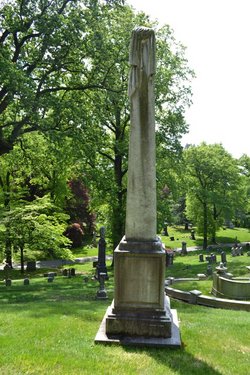
Picture of

Obelisk over the grave of Garnett, his wife, and son


Sunday, February 26, 2017

Alabama Brigadier General Alpheus Baker


Alpheus Baker

           Alpheus Baker was born on 28 May, 1828 in Clover Hill, South Carolina. He became a school teacher at age sixteen and taught in South Carolina, Georgia, and eventually settled in Eufaula, Alabama.  At the age of twenty, he began reading law and soon became an attorney.
      When the war began, Baker enlisted as a private and was quickly elected captain. Ordered to Fort Pillow, Tennessee on the Mississippi River, Baker was elected colonel of the 1st Alabama, Tennessee, and Mississippi Infantry. He was in the process of moving artillery from New Madrid, Missouri to Island No. 10 when the fort was surrendered. He was held prisoner from April, 1862 until September.
       Upon his exchange, Baker’s regiment was reorganized as an all Alabama regiment and became the 54th Alabama Infantry. He saw action at Fort Pemberton during the Vicksburg Campaign and was severely wounded in the foot at Champions’ Hill. General Loring, his superior there, praised him for his bravery.


A post war photograph of Alpheus Baker

       After his recovery, Baker was promoted to brigadier general on March 7, 1864. His brigade of four regiments, the 37th, 40th, 42nd, and 54th Alabama infantry were ordered to the Army of Tennessee in Georgia. He saw heavy action at Resaca and New Hope Church. At the Battle of Ezra Church, he was again praised by his immediate commander Major General Henry D. Clayton. His brigade had charged and lost almost half their men.
    Although praised by his division commanders, it appears his corps commander Lieutenant General S.D. Lee was somewhat disappointed in Baker. He called the general “indecisive” and “lacking in energy.” Baker’s brigade was soon transferred to Mobile, Alabama saving them from the blood bath at Franklin. His last battle was at Bentonville, North Carolina where his brigade numbered only 350 men, yet they captured 204 Federal troops.
       Following the war, Baker returned to his law practice. He was well known for his use of humor in the courtroom. Thirteen years after the war, he moved to Louisville, Kentucky and practiced law there. He died there in 1891 at the age of 63 and rests today in Cave Hill Cemetery. A space was left vacant at his request amid the Confederate POW’s buried there and he rests with those men today. 

Alpheus Baker

Alpheus Baker late in life

Image result for alpheus baker grave

Baker's tombstone

Thursday, January 26, 2017

James Green Martin: Old One Wing


Brigadier General James Green Martin

       James G. Martin was born in North Carolina in 1819. He entered West Point in 1836, graduating 14th in the Class of 1840. He stood eight places behind William "Cump" Sherman, two places behind George H. Thomas, and one behind future Confederate Lieutenant General Richard S. Ewell. Like Ewell, James Martin would soon become bald. Upon graduation, he was assigned to the artillery. He spent his first few years in Maine and Rhode Island. 
       When the Mexican War began, he saw action under both Zachary Taylor and Winfield Scott. He fought at Monterrey, Vera Cruz, Cerro Gordo, Contreras, and Churubusco. At Churubusco, he was wounded when canister fire struck him in the right arm. The wound was so severe, that it required amputation. He earned the nickname "Old One Wing" because of the loss of his arm. 
       Despite losing his arm, he remained in the U.S. Army until the Civil War began. He resigned in 1861 and returned to North Carolina, where Governor John Ellis made him a captain of cavalry and assigned him to an administrative role. 


A Photograph of Martin while in the U.S. Army

       It didn't take long for James Martin to grow tired of sitting behind a desk. In May of 1862, he requested a field command. President Davis commissioned Martin a brigadier general to date from May 15, 1862. He was given command of the District of North Carolina. He saw little action until given a brigade of his own in October of 1863. He was given four regiments of North Carolina troops and within weeks had them combat ready. He saw action in several minor engagements in southern Virginia and North Carolina. 
       He saw action at Bermuda Hundred, Virginia in May of 1864 and his brigade charged, overran a line of breastworks and sent the enemy troops flying in retreat. Martin was hoisted on the shoulder's of his men and carried through camp to loud cheers. 
       Sent to Cold Harbor to face Grant with Lee's army, Lee asked if Martin's troops would stand and fight the veterans of Grant's army. "Old One Wing" replied to Lee that his troops would fight as well as any veterans in Lee's army. He also was the first to predict that Grant would soon cross the James River and attempt to take Petersburg. 
       In June of 1864, James Martin's health began to fail him. He was taken from the front lines and given small jobs of guarding bridges and trestles. Martin's brigade remained with Lee under the command of William W. Kirkland. When Lee praised the behavior of Kirkland's brigade, Kirkland was quick to remind Lee that all such praise should go to "Old One Wing" because he had trained them. At that, General Lee stated, "General Martin is one to whom North Carolina owes a debt she can never repay."

James Green Martin

General Martin's resting place

       With the war having ended, General Martin was without a profession. He studied the law and soon began practicing his new profession. He also became very active in the Episcopal Church. "Old One Wing" died in 1878 at the age of 59 and rests today in Riverside Cemetery, Asheville, North Carolina. Ironically, as of this writing, the photograph on findagrave of General Martin is of Alabama Confederate Brigadier General Edward Dorr Tracy who has a head full of hair. 

Image result for james green martinImage result for james green martin

Edward Dorr Tracy (left) and James Green Martin


Wednesday, September 26, 2012

Hatfields and McCoys Part II: The Black River War


Brigadier General St. John R. Liddell

       St. John R. Liddell was born on 6 September 1815 in Mississippi. He graduated from the United States Military Academy and came to run his own plantation called "Llanada" near Harrisonburg, Louisiana. Liddell was a very outspoken gentleman and sometimes tended to rub others the wrong way. He commanded an Arkansas brigade under Patrick Cleburne during the Civil War until the Battle of Chickamauga when he commanded his own division. Frustrated with the in-fighting among the officer corps of the Army of Tennessee, he requested and received a transfer to the Trans-Mississippi Department to be near his family. He was captured at Fort Blakely near Mobile, Alabama on 9 April 1865.
       The famous feud began in late 1847 and came to be called the Jones-Liddell Feud or The Black River War. The feud would last 23 years and cost 14 lives before it was finally over. The feud between Charles and his wife Laura Jones and Liddell is still remembered in Louisiana, although most of the rest of the country has forgotten about it. 
       Charles Jones was born in Ireland and had a tendency to find trouble every place he went. He encountered trouble in Kentucky, Monroe, Louisiana, and finally where he settled near St. John Richardson Liddell. He even had a feud with his own wife Laura when she took him to court and forced their personal property to be divided evenly between the two. 
       The actual origins of the feud have been lost to history, but several legends have been passed down through the generations. The first legend states that the feud began over a flock of Charles Jones's geese. The more believable story was told by someone close to Liddell. The story goes that the two men had met at a social gathering. Charles Jones had stood and proposed a toast to the female virtue and Liddell threw his wine out the window. 
       Whatever occurred between the two men, we know that Jones spent the next six months threatening the life of St. John Liddell. He even appeared armed at a place where Liddell was visiting, but couldn't pull off his plan because of too many witnesses. Jones even attacked and wounded a close friend of Liddell's with a knife. 
       At this point the feud had changed gears from any of the original reasons. Charles Jones coveted a piece of land owned by Phillip and Eliza Nichols, both close friends of Liddell. Jones then began to spread false rumors about Eliza's moral character. As Liddell was arriving to visit Phillip Nichols he saw Eliza and Charles Jones talking at the end of the drive at her home. Eliza pulled a pistol and shot Jones in the face and shot him again as he fled the scene. The situation was quickly unraveling. 
       Charles Jones refused to be disgraced by the fact that a woman had shot him. He told all his friends that St. John Liddell had been the actual shooter. Charles must have told his wife Laura the truth because she offered a reward to all her slaves for the murder of Eliza Nichols. 
       Charles and Laura Jones soon left the area travelling to Ohio and defusing the situation for the time being. He sent threats against Liddell and his friends stating that he would return and kill him. In 1852, Charles and Laura Jones returned with two shady men he'd hired as assassins. The two men hid behind a tree to ambush Liddell, but the general never appeared. Another friend of Charles Jones named Henry Huntington called Liddell a coward and challenged him to a duel on the Texas state line. Liddell fearing another ambush refused to accept. 
        Soon thereafter, Samuel Glenn, another friend of Jones, began to make threats against Liddell. Someone warned Liddell that Glenn and a friend had gone to Jonesville and would soon be returning. Liddell hid and ambushed both men in their carriage. He managed to kill both Glenn and his friend Moses Wiggins. Liddell was arrested for murder, but acquitted in 1854. In 1857, a document was drawn up stating that both Jones and Liddell were to pass each other on the street as strangers and have no more intercourse among them. 
       The Civil War found both men preparing to fight for the same side. Liddell became a Confederate brigadier general and served faithfully throughout the war. Charles Jones became Lieutenant Colonel of the 17th Louisiana Infantry and eventually served on the staff of Confederate Brigadier General Daniel Ruggles. 
       As soon as the war was over, Charles Jones became a republican in order to save his vast land holdings and money. When Liddell applied for bankruptcy, Jones did everything in his power to obtain the property, even suing in court for rights to the land. Liddell thinking of his arch enemy owning the graves of his family warned Jones what would happen if he continued to pursue the purchase of the land. 


"Llanada" Plantation

       Liddell was on a boat having dinner with two friends when Charles Jones and his two sons boarded. Several men attempted to intervene for peace telling both parties to ignore the other. Jones and his sons passed by in front of Liddell's table in a probable show of defiance. Liddell attempted to rise and his friend attempted to hold him back. Jones and one of his sons opened fire striking Liddell in the chest three times. As Liddell lay on the cabin floor, Jones and his sons stood over him and continued to shot him until he was dead. The Jones's then raced from the boat and escaped. They went to the home of Sheriff Oliver Ballard and surrendered. Ballard was a close friend of Jones and everyone knew there would be no fair trial in the area.
        

The grave of St. John R. Liddell

       At 2:00 A.M. on 27 February 1870, 30 friends and relatives of Liddell surrounded the home of Sheriff Ballard. They allowed everyone to leave except Charles Jones and his sons. They stormed the house and shot Charles and his son William to death. His other son Cuthbert Jones survived by hanging ten minutes from an upper floor window sill while the lynch mob searched for him. He escaped to New Orleans and was never tried for the crime. 
       Samuel Jones mother had made a prophecy in 1852 about the feud. She'd said that neither Jones, nor Liddell would die a natural death and both men would die with more lead in their bodies than her son. Her prediction was correct. 


The Liddell family cemetery where the general rests today on his old plantation.


Wednesday, August 24, 2011

Confederate General Killed by D.U.I.?

William Edwin Baldwin

Brigadier General William Edwin Baldwin

Confederate Brigadier General William Edwin Baldwin was born in 1827 in South Carolina. He moved with his family at an early age to Columbus, Mississippi and that is where he would call home. As an adult, Baldwin owned a book store and served in a local militia company. He served as an officer in that company for twelve years. 
When the Civil War began, he was made captain and the company became a part of the 14th Mississippi Infantry Regiment. The regiment was assigned to Pensacola, Florida where Baldwin became colonel commanding the regiment. He would soon be sent to Cumberland Gap and placed in charge of a brigade. 
From there he was sent to Fort Donelson, Tennessee where he was placed in command of a brigade of Tennessee and Mississippi Infantry. His brigade led the breakout attempt there and he was commended for his courageous leadership. He was surrendered there with the rest of the fort and held prisoner of war for six months. 
After being exchanged, Baldwin was promoted to brigadier general and sent to Mississippi. His brigade fought at the Battle of Port Gibson. During the siege of Vicksburg, Baldwin was wounded, but was soon back in command of his men. When Pemberton approached all his officers looking for support in surrendering his command, he received approval from all but one man. That man was William Baldwin who voted to hold out to the last man. 
Baldwin was exchanged and sent to Mobile where he took command of a garrison of sixteen-hundred men. It was here that Baldwin would meet an early death. Although, many disagree as to what happened, we know that he died from a fall from his horse. It was reported that a stirrup broke and the fall resulted in his death. 
As with all of history things are a little murky. Rumors were soon being spread that Baldwin had been intoxicated and riding his horse at high speed when he fell from the saddle. Many believe the story was changed to a broken stirrup in an attempt to save the man’s reputation. 
Regardless of whether the rumors are true or not, William Edwin Baldwin was a brave officer and hero of the Civil War. Everyone makes mistakes and this should have no impact on the man’s war record. 
William Edwin Baldwin was 36 years old. Initially buried in Mobile, he would be re-interred in Friendship Cemetery, Columbus, Mississippi where he rests today. 


Resting place of General Baldwin

Tuesday, July 19, 2011

Fought Like Hell: William Barksdale


William Barksdale

       William Barksdale was born in 1821 in Tennessee.  His father had served in the War of 1812.  He moved to Columbus, Mississippi, became a lawyer and editor.  He was a captain in the Mexican War and proved himself to be an excellent commander.  
       Returning from the Mexican War a hero, he was elected to the United States Congress where he served until Mississippi left the Union.  He had never supported secession, but stated that he would join Mississippi if it should secede because the South had borne the burdens of maintaining the Federal government. 
       He began the Civil War as Colonel of the 13th Mississippi Infantry.   At the battle of First Manassas, he and members of his regiment stumbled into a nest of angry yellow jackets, their only action in that battle.  He was almost court-martialed for drunkenness, but promised to abstain from liquor for the duration of the war.    
       When Brigadier General Richard Griffith was killed at Savage's Station, Barksdale was promoted to Brigadier General.   McLaws had recommended him for promotion after witnessing him leading his brigades charge with the Confederate battle flag at Malvern Hill.  He missed Second Manassas, but fought at the Battle of Antietam.
       His best day of the war came at Fredricksburg in December 1862.  His brigade was assigned to defend Federal river crossings into town.  He sent General Robert E. Lee a message, asking him if he wanted a bridge of dead Yankees.  Once the Federal troops forded the river, Barksdale and his men fought an excellent rearguard action through the streets of town to the heights where Lee's main army was entrenched.  He defended the stonewall at Fredericksburg during the Battle of Chancellorsville, helping to secure Lee's right flank.  Heavily outnumbered they were pushed out of the way, but managed to move into the enemy's rear after he passed by to assault Lee and helped to save the day. 
       

No uniformed photo of Barksdale exists (all are pre-war)

       Barksdale and his brigade arrived at Gettysburg just after midnight on July 2, 1863.  They formed on the right flank the next day which mean they would be assaulting the Peach Orchard.  Beyond the Peach Orchard was the Trostle House where the Ninth Massachusetts Artillery was located.  The Federal battery was shelling Barksdale's men furiously.  Barksdale begged his division commander Lafayette McLaws and corps commander James Longstreet for permission to charge the little battery.  Both instructed him to wait.  Barksdale begged Longstreet to just give him five minutes and he would take those cannons.  Longstreet told him that they would all be going in shortly. 
       William Barksdale then called all his brigade's officers for a conference.  He stated, "The line in front must be broken.  To do so, let every officer and man animate his comrades by his personal presence in the front line."
       Barksdale was on a white horse and positioned himself just behind his line in the center of his brigade.  When the message from McLaws reached Barksdale to advance, the man's face radiated with joy.  He held his hat in his hand and his long white hair waved behind him.  He instructed his men that they would advance to within seventy-five yards of the Federal battery, halt, fire and then charge with the bayonet.  He then spurred his horse fifty yards in front of his brigade to lead them.  Advancing toward the Trostle house, Barksdale's brigade captured fifty men and General Graham.  He expertly maneuvered his brigade across the road.  When two of his colonels begged him to stop and reform, he refused.  Barksdale yelled, "We've got them on the run! Move your regiments!"
       

Area where Barksdale was wounded

       He then shouted for his men to charge. He yelled, "Advance! Advance! Brave Mississippians, one more charge and the day is ours!"
       Leading his men forward, William Barksdale was hit nine times by rifle fire.  Legend has it that a Federal captain ordered his entire company to fire at the mounted officer.  He told one of his couriers, "Tell my wife I am killed, but we fought like hell."
       Barksdale's brigade would enter the battle with 1,420 men and lose 730 men killed, wounded or missing.  His brigade broke the Federal line, overran the artillery battery, but just wasn't strong enough to hold the ground they'd won.  Captured, Barksdale was carried to the Hummelbaugh house.  He told surgeons there that Hancock had better watch his back because Pete (James Longstreet's nickname) would have a surprise for him in the morning. 


Hummelbaugh house and backyard

       He told the Federal soldiers who captured him that he had never regretted the choices he'd made and prayed that God would be a father to his boys and care for his wife.  General Barksdale survived until the next day when he was seen lying in the backyard of the Hummelbaugh house.  A young boy was there dipping water into his mouth, while the general burning with a fever, oblivious to the boy's presence was begging for water.  Federal soldiers raided his body for souvenirs.  They cut the buttons, collar insignia and gold lace from his uniform.  He was buried in the backyard of the Hummelbaugh house.
       Before the war was over, Misses Barksdale traveled to Gettysburg to retrieve the body of her husband.  She took William's dog along.  When they reached the grave where Barksdale was buried, the dog began to act peculiar.  When they began digging, the dog began to behave irrationally.  Once the body was removed and placed in the wagon, the dog could not be coaxed away from the grave.  Misses Barksdale spent the night in Gettysburg and before leaving the next morning attempted once more to take the dog home.  Still the dog would allow no one to approach the old grave.  Barksdale's wife was forced to leave the dog in Gettysburg and return home to Mississippi.  The dog refused to leave his masters old grave site and within a week died of dehydration.  Barksdale's dog now rests in the original grave of William Barksdale, somewhere in the backyard of the Hummelbaugh house at Gettysburg. 
       Local legend states that Barksdale's voice can still be heard there begging for water and at other times his dog can still be heard howling mournfully for his lost master. 


Barksdale's Grave

       William Barksdale was one of the most aggressive general's who served during the Civil War.  He was described as being fearless.  I have an uncle and several cousins who fought under his command during the war.  Some survived to return home, while a few did not. 
       General Barksdale rests today in Greenwood Cemetery, Jackson, Mississippi.  He was forty-one years old.   It was inevitable that a general possessing his personality would be killed in battle.  The most amazing thing was that he lasted as long as he did. 


Tuesday, July 5, 2011

Thomas Pleasant Dockery: The Volunteer


Thomas Pleasant Dockery

       Few people realize that one of the finest brigade commanders in the Confederate Army was Thomas Pleasant Dockery. One reason for this lack of recognition is because he served most of the war in the Trans-Mississippi Department. The man was said to have received his energy from his father Colonel Thomas Dockery who'd served in the U.S. Army during the removal of the Indians. 
       The younger Dockery was born in 1833 in North Carolina, but his family moved to Tennessee and then on to Arkansas while he was young. It was there that his father would establish a large plantation and bring the first railroad to the state. 
       When the Civil War began, Dockery organized the 5th Arkansas State Troops and was commissioned colonel. He was soon made colonel in the Confederate Army and assigned to the 19th Arkansas Infantry. The young officer would see his first action at the Battle of Wilson's Creek. He would then see action at Elkhorn Tavern and move across the Mississippi River with Earl Van Dorn. There he would lead his men in the Battle of Corinth and command a brigade during the Vicksburg Campaign. At Vicksburg his brigade was placed in a very exposed position to enemy gunboat fire, but bravely held their ground. He was surrendered there with the rest of Pemberton's army on July 4, 1863.
       After being exchanged, Dockery's men moved across the Mississippi River where they would stay for the remainder of the war. There he was commissioned a brigadier general and ordered to reorganize his command and collect troops to bring his brigade back up to strength. For some reason Kirby Smith didn't think the man was capable of handling this assignment. He would eventually bring the brigade up to just over 900 men. He saw action again during the Camden Campaign in early 1864. He was assigned command of Arkansas's Reserve Corps for the last six months of the war. 
       Many men wrote about the brave and gallant leader. One called him a "broad-gauged man." He had the reputation of being an extremely aggressive commander. One of Dockery's Infantryman said, "It was one of Colonel Dockery's hobbies to volunteer to take some battery or storm some difficult stronghold."


The Brave Brigadier

       The war cost him everything he owned. Following the war he became a civil engineer and moved to Houston, Texas. He seems to have been visiting New York City in 1898 at the age of 64 when he died. His body was sent to Natchez, Mississippi where his two daughters lived. He rests there in the city cemetery. A simple Confederate marker serves as his tombstone and that's probably the way General Dockery would have wanted it.


"Reserve Corps of Arkansas" a position he held briefly

       Had he served in Lee's Army, Thomas Dockery may have received the recognition that he deserves. It is also highly probable that such an aggressive commander would have never survived the war. Reading about the man, you are reminded of another aggressive brigadier general named William Barksdale who was shot nine times at Gettysburg.