Monday, November 14, 2011

A Crisis In Confederate Command


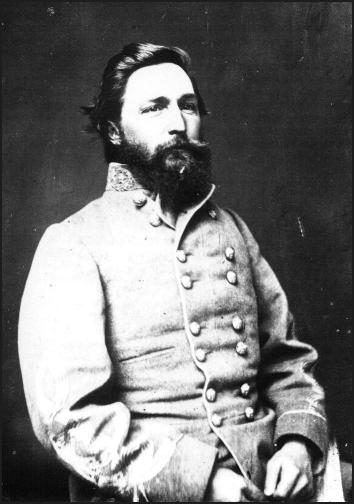
General Edmund Kirby Smith
 On a recent Civil Wargasam my wife bought me the book, The Red River Campaign, edited by Savas, Woodbury, and Joiner.  Reading this small book of only 130 pages reminded me of another book I have read on the subject.  A few years ago I read, A Crisis In Confederate Command by Jeffery Prushankin.  This book went into the disagreement between Confederate General Edwin Kirby Smith and Major General Richard Taylor.  

 The disagreement between Smith and Taylor had more to do with strategy than anything.  Richard Taylor had commanded a Louisiana brigade during the early part of the war under Stonewall Jackson in Virginia.  He had studied closely what Stonewall had accomplished.  He was extremely aggressive like Stonewall and believed that once you had your enemy against the ropes you went in for the kill.  

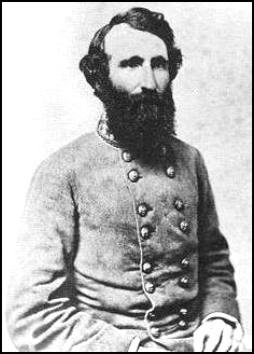
Major General Richard Taylor

Edmond Kirby Smith was the total opposite of Richard Taylor.  Kirby Smith's generalship has been compared to that of Joseph E. Johnston.  Instead, Kirby Smith's idea on strategy closely resembled that of Confederate President Jefferson Davis.  Smith believed in spreading his forces out and defending every foot of his military district.  Richard Taylor believed in concentrating his forces and hitting a small part of the enemy at a time.  

When Federal Major General Nathaniel Banks began his campaign up the Red River, Richard Taylor only had 6,000 men present.  Banks army numbered 28,000 men.  Taylor was forced to retreat because he didn't have enough troops to stop Banks.  Taylor begged Smith to reinforce him with troops from Arkansas.  Smith was worried about Federal General Steele's forces in Arkansas and was afraid to commit too many men.  He finally reinforced Taylor with 1,800 men, bringing his total to 8,800 men.  In true Stonewall Jackson fashion, Richard Taylor caught Banks army strung out on the road and hit him at a place called Mansfield.  Although his attack was disjointed, he managed to defeat Banks.  At a high cost in officers, Taylor lost 1000 men while Banks lost 2,235 men.  For Banks, the Red River Campaign  was over.  He immediately began to retreat.  

They would fight again the next day  at Pleasant Hill in an indecisive battle.  Banks army then escaped unmolested.  Taylor blamed General Edmond Kirby Smith for not reinforcing him with enough troops to destroy Banks.  Taylor was awarded with a promotion to lieutenant general for his actions in the campaign.  Unfortunately, he had lost Brigadier General Alfred Mouton, Brigadier General Thomas Green, Brigadier General William R. Scurry, and Horace Randall.

Brigadier General Thomas Green

Brigadier General Alfred Mouton


Colonel Horace Randall

Brigadier General William R. Scurry

I have always wondered what these two men could have accomplished if they had worked together instead of bickering with each other more than they did the enemy.  For more on the subject I recommend reading Prushankins A Crisis in Confederate Command.  


Tuesday, October 4, 2011

The Rashness of That Hour by Robert Wynstra


Book focuses on Iverson's actions at Gettysburg

       I've just finished reading The Rashness of That Hour by Robert Wynstra and found it to be an excellent addition to my library. The book begins with the history of General Iverson and his brigade. It is quite interesting to note that the morale of the brigade had been suffering from an internal power struggle. Governor Vance of North Carolina didn't improve things when he protested that a Georgia officer had been promoted to lead troops from his state. As I read the book, I almost began to feel sorry for Alfred Iverson.
       The further into the book I got, I soon switched back to thinking the man brought most of his suffering on himself. The more I read, the more the man reminded me of another general named Braxton Bragg. Once Iverson made an enemy, he immediately did everything in his power to rid himself of the man, no matter how useful that man might have been to the efficiency of his brigade. 


Brigadier General Afred Iverson, Jr.

       By the time I read about Iverson in battle, I had the opinion the man might have had a streak of cowardice. He was far to the rear at Chancellorsville and in his official report claimed to have been rallying another brigade's troops. His job should have been to supervise his own men in battle. At Gettysburg, he again remained in the rear, sending his men across a field against Federal infantry posted behind a stone wall. He didn't have skirmishers posted to the front, simply telling his men to advance and give them hell. They were within eighty yards of the stone wall before they knew there were Federals anywhere near them. Out of his 1400 man brigade, 900 became casualty's in a matter of minutes. They were trapped on the field in a gully under relenting fire. 


This gully would later come to be known as Iverson's Pits. 
It provided no shelter for the men trapped there.

       Iverson in his report failed to mention the brave action of his men, yet blamed them for surrendering when the Federals advanced into the gully and captured most of the survivors. Following the battle, Iverson was eventually sent back home to Georgia where he commanded a brigade of cavalry under Wheeler. He attempted to stop Sherman's invasion of the state and his brigade was credited with capturing Union General George Stoneman's raiders. They planned to ride deep into Georgia and free the prisoners at Andersonville. With a force of only six-hundred men, Iverson's brigade managed to capture Stoneman and his troops. I had always read about Iverson redeeming himself over the fiasco at Gettysburg by this daring feat in Georgia. However, to my shock, Wynstra reports that again Iverson was far in the rear of his command. The actual credit for the capture belongs to Colonel Crews who was present and leading the brigade. 


George Stoneman captured by Iverson's brigade, but not Iverson

       The book is a great read and serves as not only a biography of Alfred Iverson, but also to his North Carolina brigade. Iverson survived the war, one wants to say "of course" here and died of old age in 1911 at the age of 82. He rests in Atlanta's famous Oakland Cemetery. Wynstra does go into a good bit of detail about the commanders of every unit involved in the fighting around Gettysburg if you enjoy that type thing. I'm not one of those people. I can't remember any of the captains names, especially when he lists the commanders of each artillery unit on the field at the time. Other than that, I found it a very interesting book that I found difficult to stop reading. 


Iverson sometime around 1900

       The men of Iverson's North Carolina brigade never forgave their general. Forty years after the battle, Captain Turner of Iverson's command wrote, "Unwarned, unled as a brigade, went forward Iverson's deserted band to its doom. Deep and long must the desolate homes and orphan children of North Carolina rue the rashness of that hour." These are the most appropriate last sentences of Wynstra's book.


Me at the grave of Iverson August, 2011.


Tuesday, September 20, 2011

The Other Virginia: CSS Virginia II


CSS Virginia II

       Everyone remotely interested in the American Civil War has some understanding about the USS Monitor and the CSS Virginia (formerly USS Merrimack). A lot less have heard of the Confederate Ironclad called the CSS Virginia II. Construction on this ship which was classified as an ironclad-ram, began in the spring of 1862 in Richmond, Virginia. Thirty-thousand dollars was raised by the Richmond chapter of the "Ladies Aid and Defense Society". Although, such a large portion of money was raised by women, the Virginia II never acquired the nickname that was given to the CSS Palmetto State in Charleston Harbor. Money for the Palmetto State was raised by the women of Charleston and therefore it was called the "Ladies Gunboat". 


CSS Virginia II blueprints

       The sleek warship was finally ready for launch after a year of construction. It slid into the water in June of 1863 among prolonged cheers. Sadly, because of shortages, she wouldn't be battle ready until the spring of 1864. She would see her first major action at Trent's Reach in January of 1865. The Confederate intentions at Trent's Reach was to break through the Federal Navy and attack City Point, Virginia, General Grant's supply depot for the Army of the Potomac. 


USS Onondaga

       Despite two days of bitter fighting, the Confederate fleet, which consisted of the CSS Virginia II, CSS Fredericksburg, and the CSS Richmond were forced to withdraw. The Federal Navy had one ironclad available called the USS Onondaga accompanied by several gunboats. The Onondaga had withdrawn downriver, the captain afraid to engage the three Confederate ironclads alone. The next day, General Grant ordered the Onondaga back upstream with the gunboats to attack the Confederate flotilla. 
       During the night, at ebb tide, the Virginia II and the Richmond became grounded. The Onondaga arrived and opened fire on the two grounded ships, neither of which could return fire because of they're position. Just as the Onondaga began to close with the two ironclads, the tide rose enough for them to float free. After a brief engagement, the Confederate ironclads retreated upriver while the Onondaga returned downstream toward City Point. 
       The Onondaga had been hit once by the Virginia II which seemed to cause some damage. The Onondaga had hit the Virginia II seven times without much effect, but the Virginia II had been hit by cannon fire over seventy times from the Federal forts ashore and was in bad shape. Her engine was leaking steam and it became obvious she couldn't re-engage the Federal navy without repairs. The Confederate ships had fired almost fifteen-hundred rounds during the two days of action. 


Riddled smokestack of the Virginia II

       Two months after the battle, all three Confederate ironclads were scuttled to prevent capture as General Lee evacuated Richmond and Petersburg. The Virginia II was supposed to be as formidable as her namesake the Virginia. She carried 150 officers and men and was supposed to obtain a speed of ten knots, the fastest of the Confederate built ironclads. The ship carried three 7" Brooke rifles and one 10" Brooke smoothbore. Her weakness was in her armor plating. Originally intended to carry 6" of iron as a shield, because of shortages, she carried 5" on her sides and stern. She was a sleek ship with armor at various angles. Had she been employed earlier in the war, she may have made a diffference. The CSS Virginia II rests today under the twenty feet under the silt opposite from Drury's Bluff. 

Wednesday, September 14, 2011

Alfred Holt Colquitt: A man of many talents


Alfred Holt Colquitt before his 1862 promotion

       Alfred Holt Colquitt became many things during his sixty-nine years on this earth. He was born in Georgia in 1824, the son of a United States Senator. Young Alfred graduated from Princeton and became a lawyer. He served in the United States Army during the Mexican War being commissioned a major. Returning from the Mexican War, Colquitt began to dabble in politics becoming a United States Congressman and serving in the Georgia State Legislature.
       When the Civil War began, Colquitt became a captain in the 6th Georgia Infantry. By the time the regiment saw action at Seven Pines, Colquitt had become colonel. He led the regiment throughout the Seven Days and was promoted to brigadier general before Lee's army invaded Maryland. He would command a brigade at Antietam, Fredericksburg, and Chancellorsville. His brigade was so under-strength following the latter battle that General Lee sent Colquitt and his men back to Georgia to recruit. 
       

Colquitt sometime after his promotion in 1862

       Colquitt and his brigade would next see action in Florida. They were sent there and placed under the command of Brigadier General Joseph Finegan. They were sent there to stop and invasion of 5,000 men under Federal Brigadier General Truman Seymour. Against orders, the Federal general began his invasion meeting Colquitt and Finegan at the Battle of Olustee. Both forces were about equal, but the Federal army lost over 2000 men, while the Confederate's lost less than a thousand. It was one of Colquitt's best days as a commander. Not only had they stopped the invasion, but had defeated the famed 54th Massachusetts Colored Infantry.
       During the Siege of Petersburg, Colquitt's brigade would again be sent to Virginia to serve under General Lee. Despite having seen some of the war's fiercest fighting, especially at Antietam, Colquitt came through the war without a scratch. He returned to Georgia and eventually became governor of the state for two terms and was elected to two terms in the United States Senate. He would die while serving there. 


Colquitt in his later years

       During the Civil War, he was called a competent and inspiring commander. He suffered a stroke in 1893 and was paralyzed on one side of his body for the last six months of his life. Unable to speak, he suffered another stroke on March 26, 1894 and died. He rests today in Rose Hill Cemetery, Macon, Georgia. He'd accomplished a lot in his life, fighting in two wars, serving in both houses of congress, the Georgia legislature, a lawyer, governor and at one point in his life he became a preacher. 


Colquitt's grave

Saturday, August 27, 2011

Excerpt from my upcoming book "Die Like Men": Shy's Hill action at Nashville


Me standing at the spot where the following occurred 

      Brigadier General Thomas Benton Smith was young, just twenty-six years old. He was a striking man, tall and attractive to the ladies. He thought about Tod Carter, his assistant quartermaster who’d been killed back at Franklin. Tod had always kidded him about sharing a few ladies with him.
          Like General Gordon, who’d been captured at Franklin, Smith had graduated from the Nashville Military Institute. He’d become a railroad conductor after graduation. People just didn’t seem to understand that he liked to ride trains.
          The rain was coming down in torrents now. Like his men, he was cold, tired, and hungry. They’d gotten little sleep last night. At the moment, Smith was frustrated over his position. They’d been placed here in the dark on the crest of this hill. Instead of being on the military crest, they were on the actual crest itself. What all this meant was, when the Federals advanced, they couldn’t fire on them until they came over the ledge just twenty yards in front of his position. This situation made his line extremely weak.


Brigadier General Thomas Benton Smith

       He had cannons, but they couldn’t depress their muzzles to fire on the advancing Yankees until they were on top of them. It wasn’t his fault either, but that wasn’t any consolation to him at the moment. Ector’s Texans had occupied the position in the dark last evening. They hadn’t even bothered to throw up breastworks or place abatis in front of the lines. His brigade had been brought up here later in the night, and they’d had to dig all night to be prepared. By the time it had gotten to be daylight, he realized the fragility of his situation, but by then it was too late. Bate had instructed him to throw up breastworks. He had told Smith that the entire position of the army may rest on his brigade on top of this hill.
          The ground had been frozen last night and made the digging difficult. To add to the problem, he had very few picks and shovels. Most of his men were forced to dig with their bayonets. Others would sneak out into the dark and gather branches and logs. They threw anything that would stop a bullet into their breastworks. Rocks were piled up and covered over with dirt. All night long he had listened to the enemy voices in the cool night air near the base of the hill. He could see their fires through the trees.
          His adjutant, Captain Jones, and James Cooper, one of his aides, walked up. Cooper said, “Sir, a six-foot man could get within twenty feet of our works, and we wouldn’t know it.”
          Captain Jones added, “This is the poorest position we’ve ever been placed in.”
          “I agree,” Smith replied, “but it’s too late to change our dispositions now, gentlemen.”
          “That’s not all the good news, sir,” Cooper jerked a thumb over his shoulder toward the rear. “Cheatham has ordered off Ector’s brigade. That’s the only reserves we have, and we keep stretching the line left. We ain’t much more than a skirmish line now.”
          Smith shook his head, making no reply.
          Cooper added. “I’m sure, when darkness gets here, we’ll be ordered to retreat. By the sound in our rear, we may already be surrounded.”


Major General William Brimage Bate

       He looked to his right and noticed how thin Finley’s Florida brigade had become. Ector’s Texas brigade had been pulled out of line about an hour ago to go face Wilson’s cavalry on some knoll in their rear. He and Strahl’s old brigade had been forced to extend their already thin lines to cover the gap Ector’s men left behind. He thought about poor old Otho Strahl. He was a good man. He’ll be severely missed. Strahl’s brigade and Smith’s were all Tennesseans fighting for their homes.
          By the sound of the firing behind him, he wondered if his brigade would see any fighting at all. It was becoming unnerving. The Federal cavalry was definitely getting in their rear, and he began to wonder if they wouldn’t be forced to surrender without a fight. The firing in rear of their position soon stopped. He wished he knew what was happening.
          Suddenly, Thomas Smith’s world erupted in flame and smoke. Federal batteries to the west and north of the hill all opened fire at once. It felt as though they were concentrating their fire on Smith’s one brigade. It probably felt that way to everyone on the hill. With that much artillery being poured on this hill, it could only mean one thing—an infantry assault was coming.


Wednesday, August 24, 2011

Confederate General Killed by D.U.I.?

William Edwin Baldwin

Brigadier General William Edwin Baldwin

Confederate Brigadier General William Edwin Baldwin was born in 1827 in South Carolina. He moved with his family at an early age to Columbus, Mississippi and that is where he would call home. As an adult, Baldwin owned a book store and served in a local militia company. He served as an officer in that company for twelve years. 
When the Civil War began, he was made captain and the company became a part of the 14th Mississippi Infantry Regiment. The regiment was assigned to Pensacola, Florida where Baldwin became colonel commanding the regiment. He would soon be sent to Cumberland Gap and placed in charge of a brigade. 
From there he was sent to Fort Donelson, Tennessee where he was placed in command of a brigade of Tennessee and Mississippi Infantry. His brigade led the breakout attempt there and he was commended for his courageous leadership. He was surrendered there with the rest of the fort and held prisoner of war for six months. 
After being exchanged, Baldwin was promoted to brigadier general and sent to Mississippi. His brigade fought at the Battle of Port Gibson. During the siege of Vicksburg, Baldwin was wounded, but was soon back in command of his men. When Pemberton approached all his officers looking for support in surrendering his command, he received approval from all but one man. That man was William Baldwin who voted to hold out to the last man. 
Baldwin was exchanged and sent to Mobile where he took command of a garrison of sixteen-hundred men. It was here that Baldwin would meet an early death. Although, many disagree as to what happened, we know that he died from a fall from his horse. It was reported that a stirrup broke and the fall resulted in his death. 
As with all of history things are a little murky. Rumors were soon being spread that Baldwin had been intoxicated and riding his horse at high speed when he fell from the saddle. Many believe the story was changed to a broken stirrup in an attempt to save the man’s reputation. 
Regardless of whether the rumors are true or not, William Edwin Baldwin was a brave officer and hero of the Civil War. Everyone makes mistakes and this should have no impact on the man’s war record. 
William Edwin Baldwin was 36 years old. Initially buried in Mobile, he would be re-interred in Friendship Cemetery, Columbus, Mississippi where he rests today. 


Resting place of General Baldwin

Sunday, July 31, 2011

William Booth Taliaferro: The man who couldn't destroy a Stonewall


William Booth Taliaferro

William Booth Taliaferro (pronounced Tah-liver), was born in 1822 in Virginia.  The man came from a very prominent family.  He was the nephew of James A. Seddon, who would become a Confederate Secretary of War.  He earned a degree at William and Mary College and then attended Harvard Law School.  He would work as an attorney until the Mexican War began.  He then joined the Eleventh United States Infantry where he was made a captain.  He would eventually be promoted to major before he was mustered out following the war.  Taliaferro would then serve in the Virginia House of Delegates and became a major general in the Virginia State Militia.  

When the Civil War began, Taliaferro would be made colonel of the Twenty-third Virginia Infantry Regiment.  The unit would see action at Rich Mountain and Corrick's Ford under Robert S. Garnett (Garnett would be the first general killed during the war at Corrick's Ford).  He was soon commanding a brigade consisting of Georgia, Arkansas and Virginia Infantry.  His subordinates hated him because he was a very strict disciplinarian.  He was assaulted by a drunken Georgia soldier under his command on one occasion.  


A young Taliaferro before the war

He also proved to be a thorn in the side of his superiors.  He and William Loring petitioned Richmond to remove "Stonewall" Jackson from command in January of 1862.  Though they both failed, Taliaferro was promoted to brigadier general.  Jackson protested the promotion, but at the same time appreciated Taliaferro's devotion to discipline.  Though neither man liked the other personally, they managed to serve together during the Valley Campaign and Seven Days battle's around Richmond.  

At Cedar Mountain, when General Charles Winder was killed, Jackson gave Taliaferro  command of the division.  He would command the division at the Battle of Groveton where he would be severely wounded.  The man would be absent recovering for three months.  He again commanded the division at the Battle of Fredericksburg where they were held in reserve, yet still suffered a slight wound.  Taliaferro felt he had earned a promotion to major general by this point.  He became frustrated thinking Jackson was blocking his promotion.  He would ask and be granted a transfer, both men happy to be rid of the other.  


Another wartime view of Taliaferro

Taliaferro was sent to General Beauregard in Charleston, South Carolina.  Beauregard placed the man in command of Battery Wagner, a sand fort located on Morris Island.  Taliaferro and his thirteen hundred man command endured a week of heavy shelling from Federal gunboats.  Following the bombardment, over 5,000 Federal infantry assaulted the fort.  The assault would fail, the Union army losing over 1400 men including Colonel Robert Gould Shaw, while Taliaferro's force lost less than 200.  


Colonel Robert Gould Shaw

Colonel Shaw was the son of a prominent Boston family and led the Fifty-fourth Massachusetts Colored Infantry.  The Confederate government considered leading black troops against Southern forces to be inciting servile insurrection.  Also, during that time in American history, it was a disgrace for a white man to be buried in the same area as a black man.  When Shaw's father wrote the Confederate commanders at Charleston a request for the body of his son, the reply was, "We buried him with his niggers."  It is still argued today who exactly replied to Shaw's father. Some say it was Taliaferro, others claim it was General Trappier, while still others claim it was an unnamed Confederate major.  Regardless, it was meant as an insult.

Battery Wagner would never fall, despite being bombarded for another sixty days, it would eventually be abandoned for lack of supplies.  A month following the battle, Beauregard removed Talaiferro from command at Battery Wagner and placed him in command of an infantry division on James Island.  He would command a division for the remainder of the war, but saw very little actual fighting.  His command would be surrendered by Joseph E. Johnston to Sherman on May 2, 1865.  He would never receive his longed for promotion to major general.

After the war, Taliaferro would return to the Virginia State Legislature and serve as a judge.  He served on the boards of William and Mary College and the Virginia Military Institute.  William Booth Taliaferro would die in 1898 at the age of 75.  He rests today in Ware Church Cemetery, Gloucester, Virginia.  Who knows what he may have become had he not undermined "Stonewall" Jackson during the first year of the war.  


Taliaferro's resting place