Showing posts with label charleston. Show all posts

Thursday, May 28, 2020

Clement Hoffman Stevens: "Rock"

Clement Hoffman Stevens (1821-1864) - Find A Grave Memorial

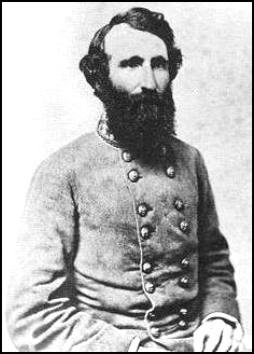
A Pre-War photograph of Clement Hoffman "Rock" Stevens

       Clement Hoffman Stevens was born in 1821 in Norwich, Connecticut. His father (a Southerner by birth) was serving in the United States Navy at the time. While a child, Stevens family moved to Florida. When the Seminole War began the family moved to Pendleton, South Carolina (his mother's place of origin) for a safer environment. Like his father, Stevens also joined the Navy and served under two officers that were relatives of his. He married the sister of future Confederate generals Barnard E. Bee and Hamilton P. Bee. 
       Stevens didn't remain in the Navy long before entering the banking business in Charleston, South Carolina. When the Civil War began, Stevens dove into military studies and became an expert on Civil War ordnance. He was already a colonel in the South Carolina Militia when the war began. Stevens built a battery in Charleston Harbor using railroad iron to protect his gunners. He then traveled with his brother-in-law Brigadier General Barnard E. Bee to Virginia where he served as a staff officer during the Battle of Manassas. His brother-in-law was killed during the fighting there while Stevens was seriously wounded. 
       He returned to Charleston and took command of a militia regiment. He and Ellison Capers raised the 24th South Carolina Infantry. Stevens would become their colonel and Ellison Capers was made his lieutenant colonel. Both men would become general officers by the end of the war. He led the regiment in the Battle of Secessionville where he stopped the Federal attack. He remained on the east coast for the next year. During the spring of 1863, his regiment was assigned to Brigadier General States Rights Gist's brigade and sent to Jackson, Mississippi to assist Joseph Johnston's army relieve besieged Vicksburg. Johnston failed to move in time to assist Pemberton and soon Vicksburg was forced to surrender. Gist's brigade was then sent to the Army of Tennessee and fought at the Battle of Chickamauga. A funny incident occurred before the battle. While the battle raged the first day, Gist's brigade was stranded in Rome, Georgia because a railroad engineer was sleeping. Stevens was so angry that he threatened to shoot the man. Stevens had two of his men fire the boilers of the locomotive and forced the engineer to drive them to the battlefield at gunpoint. 
       At Chickamauga, he was severely wounded again and had two horses killed beneath him. His division commander William H.T. Walker called him "iron-willed" and recommended him for promotion for his gallantry as a leader in combat. Colonel Clement Hoffman Stevens became Brigadier General Stevens in January of 1864. He was given command of W.H.T. Walker's old brigade when its new commander Brigadier General Claudius C. Wilson died of fever. His brigade participated in the Atlanta Campaign but saw limited action. General Stevens earned the nickname "Rock" at this time from his troops for his steadiness under fire. Stevens was upset at the replacement of Joseph E. Johnston before the engagements around Atlanta.
       In the first battle for Atlanta at Peachtree Creek, Stevens was leading his brigade on horseback in a charge against Federal breastworks. Sources conflict each other about whether he was hit by a bullet or artillery fire. Either way, he was struck in the head by a projectile that fractured his skull behind his jaw. While being carried from the field by two officers, they were also shot. Stevens was carried to Macon, Georgia where surgeons removed what they called a bullet and bits of bone. General Stevens died on July 25, 1864. He rests today in St. Paul's Episcopal Cemetery in Pendleton, South Carolina along with his brother-in-law General Barnard E. Bee. General Stevens was 42 years old. His wife Ann had died two years earlier and he left behind two sons. 
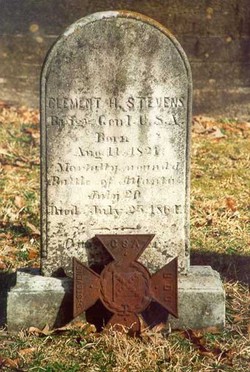
Picture of

Grave of General Stevens

Sunday, January 29, 2017

Thomas Muldrop Logan: Sherman's Youngest Confederate General


Thomas Muldrop Logan

       Thomas Muldrop Logan was a long lanky Confederate Brigadier General by the end of the war. He was born in Charleston, South Carolina in 1840. He graduated first in the South Carolina College in 1860 and began the war as a private. Following the bombardment of Fort Sumter, he was elected 1st lieutenant in the Hampton Legion. He saw his second serious action at the Battle of Manassas on Henry Hill. He action there won him a promotion to captain. 
       During the Seven Days battles, he was severely wounded at Gaines Mill and put out of action a few months. Though not quite healed yet, he returned in time to fight at Second Manassas. The Hampton Legion overran an artillery battery there and he won even more praise for his performance. At Sharpsburg (Antietam) he won even more praise for his distinguished bravery. 


The Boyish Looking Thomas Logan

       Following that battle, he transferred to Micah Jenkins South Carolina Brigade as a lieutenant colonel. He was praised in that capacity as well. Along with the rest of Micah Jenkins men, he missed the Battle of Gettysburg. At the Battle of Chickamauga, he was placed in charge of all the sharpshooters in John Bell Hood's division. He continued in that capacity to the Battle of Knoxville where Longstreet praised him for his courage and skill.
       Logan was then sent to Drewry's Bluff where he served Beauregard as a staff officer. Following an engagement there, he won promotion to colonel and was given command of the famous Hampton Legion. There were two Hampton Legion's at this time, one of infantry and one of cavalry. Logan commanded the cavalry regiment. He saw action at Riddell's Shop where he suffered another serious wound. 
       After he recovered, he was assigned to command Butler's South Carolina Cavalry Brigade. Fitz Lee recommended he be promoted to brigadier general and permanently assigned to that command. His promotion to brigadier general ranked from February 15, 1865. At the time, he was the youngest general in the Confederate Army. He saw action at Bentonville as a general and the war came to a close. 


One of only three photographs of Logan in uniform

       During the surrender ceremonies, Sherman met Thomas Logan and could hardly believe that such a "slight, fair haired boy" was a general. He imagined that Logan must be the youngest general in the war. He of course was wrong, that distinction belonged to Union Brigadier General Galusha Pennypacker who was four years younger than Logan. (Legend sometimes has it that Pennypacker was promoted by Lincoln because he thought his last name sounded comical.) 
       General Logan asked Sherman if he could take the train home to Charleston, South Carolina. Sherman surprised him by offering him a seat on the train about to leave for Raleigh. Logan was surprised by the kindness of Sherman, but replied that he wasn't ready to leave just yet. He wanted to say goodbye to his men. Sherman told him to just find General Kilpatrick when he was ready to go and he would direct him to Sherman who would ensure he had a seat on a train. Logan thanked Sherman for his kindness. 


Kate Virginia Cox

       Following the war, Thomas Logan borrowed five dollars and married Kate Virginia Cox of Virginia. He studied law in Richmond and soon became a railroad tycoon. He was one of the lucky ex-Confederates that didn't struggle to make a living. He was often associated with John D. Rockefeller. He died in New York City in 1914 and is buried in Hollywood Cemetery, the "Arlington of the Confederacy" in Richmond, Virginia. 


A post-war photograph of Thomas M. Logan


My buddy Jerry (right) and I at the grave of Thomas M. Logan


Thursday, March 26, 2015

James Conner: The General and His Unlucky Leg


Brigadier General James Conner

       James Conner was born in Charleston, South Carolina in 1829. He became a lawyer and began his practice in 1852. He soon became a United States Attorney and tried a case involving the illegal slave trade. Like most in South Carolina, James was a secessionist. When the war began, he became a captain under Wade Hampton in the Hampton Legion. Sent to Virginia, he soon had a minor dispute with fellow officer and future Confederate general Matthew Butler. The two seemed to be advancing together against Union forces, when Butler attempted to get all the credit for a victory and moved too quickly allowing the Federals to escape. 
       At the Battle of Manassas, when Hampton and other commanders were wounded, Conner took over the Legion and following the battle was promoted to major. In the spring of 1862, he was made colonel of the 22nd North Carolina Infantry that needed an experienced commander. At the Battle of Mechanicsville, a bullet struck him in the leg and broke a bone. He was out of action for two years because of the ugliness of the wound. During that time he served on various military courts. 
       On June 1, 1864, Conner was promoted to brigadier general and given command of Samuel McGowan's South Carolina brigade. He was still not fit for extreme field service, so Lee assigned him to Chaffin's Bluff. He then proceeded as part of Kershaw's Division to participate in Jubal Early's Shenandoah Valley Campaign. Just a few days before the Battle of Cedar Creek, a shell fragment struck him in his "unlucky leg." The shrapnel passed through Conner's knee and shattered the bone. This time the limb would be amputated close to his hip. Thus ended the war for Brigadier General James Conner. 


The only other known wartime photograph of James Conner

       Conner would return to his law practice following the war. Had injury not kept him from so much of the war, he may have become one of the great generals we read of today. James Conner was a friend of both Robert E. Lee and Pierre Beauregard. He would die in Richmond, Virginia in 1883 at the age of 53. He died of bronchitis. His wife Sallie would outlive him by 44 years, dying in 1928. James Conner rests today in Magnolia Cemetery in Charleston, South Carolina, the city of his birth.


Sallie <i>Enders</i> Conner

Sallie Enders the wife of James Conner


A photograph of Sallie sometime before her death

James Conner

Graves of both James and Sallie Conner


Wednesday, May 7, 2014

Trouble at the Top: 1st South Carolina Artillery


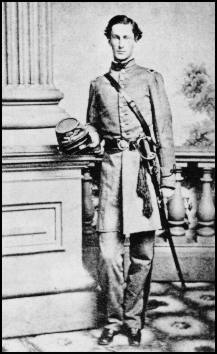
Colonel Alfred Moore Rhett

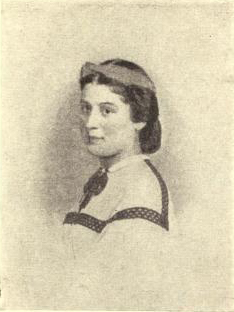
       Alfred Moore Rhett was born in 1829 in Beaufort, South Carolina. His father was Robert Rhett, the secessionist fire-eater. Alfred was a Harvard graduate and planter before the Civil War began. He began the war as a 1st lieutenant in the 1st South Carolina Artillery. By March of 1862, he'd been promoted to major. Rhett was an extremely arrogant man. 
       The commander of the 1st South Carolina Artillery was Colonel William Ransom Calhoun, the nephew of John C. Calhoun the "father of secession". Colonel Calhoun was born in 1827 in Charleston, South Carolina. He was a graduate of the United States Military Academy, served briefly in the U.S. Army before also becoming a planter. Prior to the trouble between himself and Major Rhett, Calhoun fought at the battles of Second Manassas and Secessionville.
       The trouble between the two officers seems to have begun in April of 1861 around the time of the shelling of Fort Sumter. It appears that Rhett thought Calhoun an inferior officer to himself and often denounced him in public. He resented Calhoun's military education and thought he was better suited for colonel. He'd already fought two duels with a friend of Colonel Calhoun who had overheard him making offensive remarks about the colonel. Neither man had been injured in these two duels. 
       It appears that Rhett had been drinking when the final insult occurred. It was reported that Rhett called Calhoun a "puppy", but most likely he called him a part of a woman's anatomy that was not used in every day language of that time. Calhoun challenged Rhett to a duel. In both previous duels, Rhett had let the other party fire first and after having been missed, he fired his pistol into the air. Legend has it that Calhoun was so fed up with Rhett, that he made it a rule that neither party was to fire into the air. 
       It was called one of the fairest duels ever fought by the Richmond Daily Dispatch. There were three state senators, the South Carolina speaker of the house, a civilian, and an army captain present for the duel. Major Rhett preferred the "drop" shot (where the pistols are pointed toward the sky when the order to fire is given), but Colonel Calhoun preferred to shoot on the "rise" (where the pistols are pointed toward the ground at one's side before the order is given). Discussions were held and Calhoun won. It seems that Major Rhett took the time to write out a formal protest before stepping out to duel. 


Another view of Alfred Moore Rhett

       Calhoun was dressed in civilian clothing as he had been away from the army because of ill health. Rhett was dressed in his major uniform. When the order to fire was given, Rhett fired just a half second after Calhoun. Calhoun missed and the bullet from Rhett's pistol struck Calhoun in the body. He survived for about an hour. 
       Major Rhett was arrested for dueling, but Beauregard soon pardoned him and promoted him to colonel of the 1st South Carolina Artillery. Rhett briefly commanded Fort Sumter. He would serve in Charleston until 1865 when he retreated into North Carolina where he was captured at the Battle of Averasboro. A Federal soldier called Rhett a "devil in human shape". He was held at Fort Delaware until July 24, 1865. 

Col Alfred Moore Rhett

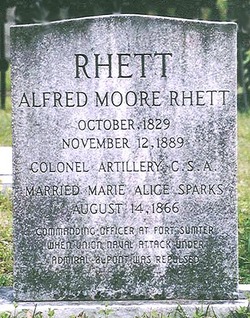
Tombstone of Alfred Moore Rhett

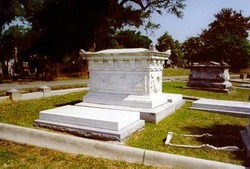
       Rhett served as police chief of Charleston, South Carolina following the war and died on November 12, 1889. Ironically, both men were buried in Magnolia Cemetery in Charleston, where they rest today. 
       

Sunday, July 31, 2011

William Booth Taliaferro: The man who couldn't destroy a Stonewall


William Booth Taliaferro

William Booth Taliaferro (pronounced Tah-liver), was born in 1822 in Virginia.  The man came from a very prominent family.  He was the nephew of James A. Seddon, who would become a Confederate Secretary of War.  He earned a degree at William and Mary College and then attended Harvard Law School.  He would work as an attorney until the Mexican War began.  He then joined the Eleventh United States Infantry where he was made a captain.  He would eventually be promoted to major before he was mustered out following the war.  Taliaferro would then serve in the Virginia House of Delegates and became a major general in the Virginia State Militia.  

When the Civil War began, Taliaferro would be made colonel of the Twenty-third Virginia Infantry Regiment.  The unit would see action at Rich Mountain and Corrick's Ford under Robert S. Garnett (Garnett would be the first general killed during the war at Corrick's Ford).  He was soon commanding a brigade consisting of Georgia, Arkansas and Virginia Infantry.  His subordinates hated him because he was a very strict disciplinarian.  He was assaulted by a drunken Georgia soldier under his command on one occasion.  


A young Taliaferro before the war

He also proved to be a thorn in the side of his superiors.  He and William Loring petitioned Richmond to remove "Stonewall" Jackson from command in January of 1862.  Though they both failed, Taliaferro was promoted to brigadier general.  Jackson protested the promotion, but at the same time appreciated Taliaferro's devotion to discipline.  Though neither man liked the other personally, they managed to serve together during the Valley Campaign and Seven Days battle's around Richmond.  

At Cedar Mountain, when General Charles Winder was killed, Jackson gave Taliaferro  command of the division.  He would command the division at the Battle of Groveton where he would be severely wounded.  The man would be absent recovering for three months.  He again commanded the division at the Battle of Fredericksburg where they were held in reserve, yet still suffered a slight wound.  Taliaferro felt he had earned a promotion to major general by this point.  He became frustrated thinking Jackson was blocking his promotion.  He would ask and be granted a transfer, both men happy to be rid of the other.  


Another wartime view of Taliaferro

Taliaferro was sent to General Beauregard in Charleston, South Carolina.  Beauregard placed the man in command of Battery Wagner, a sand fort located on Morris Island.  Taliaferro and his thirteen hundred man command endured a week of heavy shelling from Federal gunboats.  Following the bombardment, over 5,000 Federal infantry assaulted the fort.  The assault would fail, the Union army losing over 1400 men including Colonel Robert Gould Shaw, while Taliaferro's force lost less than 200.  


Colonel Robert Gould Shaw

Colonel Shaw was the son of a prominent Boston family and led the Fifty-fourth Massachusetts Colored Infantry.  The Confederate government considered leading black troops against Southern forces to be inciting servile insurrection.  Also, during that time in American history, it was a disgrace for a white man to be buried in the same area as a black man.  When Shaw's father wrote the Confederate commanders at Charleston a request for the body of his son, the reply was, "We buried him with his niggers."  It is still argued today who exactly replied to Shaw's father. Some say it was Taliaferro, others claim it was General Trappier, while still others claim it was an unnamed Confederate major.  Regardless, it was meant as an insult.

Battery Wagner would never fall, despite being bombarded for another sixty days, it would eventually be abandoned for lack of supplies.  A month following the battle, Beauregard removed Talaiferro from command at Battery Wagner and placed him in command of an infantry division on James Island.  He would command a division for the remainder of the war, but saw very little actual fighting.  His command would be surrendered by Joseph E. Johnston to Sherman on May 2, 1865.  He would never receive his longed for promotion to major general.

After the war, Taliaferro would return to the Virginia State Legislature and serve as a judge.  He served on the boards of William and Mary College and the Virginia Military Institute.  William Booth Taliaferro would die in 1898 at the age of 75.  He rests today in Ware Church Cemetery, Gloucester, Virginia.  Who knows what he may have become had he not undermined "Stonewall" Jackson during the first year of the war.  


Taliaferro's resting place