Sunday, October 1, 2023

The Man Responsible For Racism in America


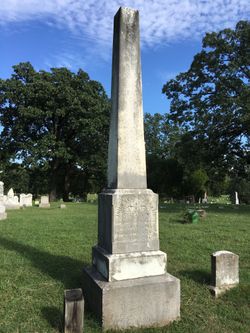
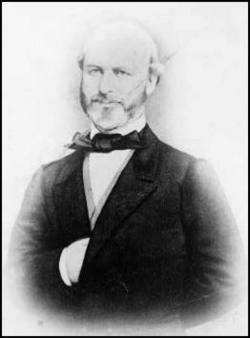
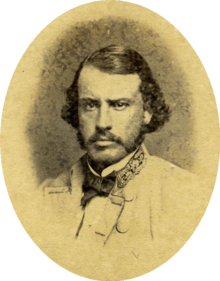
Edward V. Valentine

       I've been doing quite a bit of research to learn who is most responsible for the trouble that has been caused in this country in the past few years. The man responsible was one I knew very little about. All it takes is serious research to uncover the truth and I have accomplished that.
       I learned that the man most responsible was a man born in Richmond, Virginia in 1838. His name was Edward Virginius Valentine. He was old enough to fight in the war, but missed the entire conflict because he spent the war years studying sculpting in Europe. There isn't a lot of information out there on Edward Valentine, but trust me, the man is to blame for all American racism. If you don't believe me, just ask Washington Post Reporter Gregory Schneider. 
       According to Schneider, Valentine's monuments brought "racist mythology to life." Basically, Schneider goes on to explain how those monuments were the main reason that George Floyd was killed by white Minnesota police officers. I'm not sure those cops had ever seen a Confederate monument in their life, but it's easier for the extreme leftists to blame inanimate objects for their problems than real life people. 


One of the dangerous monuments that caused George Floyd's death

       I've been to several of Edward Valentine's monuments myself and yet to have killed anyone or felt any reason to be racist, but I have an IQ above my shoe size unlike most people today. I can see why anyone without much intelligence could feel threatened by a statue today. I also love the way those with a low IQ attempt to teach the rest of us that we are the ones that are wrong. 
       One of my favorite arguments is where they tell me these monuments didn't appear until Jim Crow laws started coming into affect. Do these people do any real research before making such statements? Why were there no monuments to Confederate heroes erected right after the war? Could it have been because it was illegal to raise such monuments? It was even illegal to wear a Confederate uniform in public after the war. It wasn't because Confederate's felt guilty or like they had done anything wrong I can assure you. After all, they were just doing what we celebrate every July 4th and that was the right to secede from an overbearing government. 
       I have a few questions these genius people need to answer for me. Since they are so set on the war being over slavery, surely they have the answers I need. When the slave trade was open and the Northern states were making quite a bit of money off selling slaves to the South, why were there no large groups of abolitionists? When it no longer made them money, then they became concerned about the morality of the institution. This also goes for England. Great Britain made tons of money off the slave trade, yet by the time of the war, they had become concerned with the morality of slavery (they weren't making money off it anymore). Do you see how things have always worked in the world? Just follow the money and the answer will lie there. 
       I pray to God that he will forgive Edward Valentine for creating such monstrous statues that caused so many innocent deaths. If only he had known how dumb we would become. 


Tuesday, June 20, 2023

Making Sense of Juneteenth


         I’ve been trying to make sense of this new Federal holiday called Juneteenth. I did a little research to try and understand it. I googled its origins and found the explanation that CBS news gives as extremely hilarious. Does anyone do any research before writing anymore or has the country become that “dumbed down” that there is no fear of someone having the intelligence to learn the truth?

          Before you get upset with me, read this entire article. I don’t have a problem with people celebrating the end of slavery. I do have a problem with it being limited to just people with African ancestors who were slaves. Native Americans were slaves, Irish were slaves, the Jewish were slaves, and the list goes on and on. I also have a problem with the explanation given for Juneteenth.

          According to Emily Mae Czachor a news editor for CBS, the proclamation freed the slaves, but couldn’t free everyone in Confederate controlled states. Has this person even read the proclamation? Did the proclamation free a single slave? The answer to both questions is probably the same. No.  

          The proclamation was issued as a war measure only. President Lincoln understood two things about the slaves. The first was the fact that they kept the Confederate Army fed and the second that they were home while Southern soldiers were at the front. If he could incite slave rebellions in the heart of the Confederacy, he could finally win a war that he was losing. The most surprising thing to Mr. Lincoln was the fact that the slaves in the South remained loyal. Not a single slave insurrection occurred during the war.

          The states of Kentucky, Maryland, Delaware, and Missouri would retain their slaves until the 13th Amendment was passed. If Lincoln was so concerned with freeing slaves, these would have been the first he freed. These states were still part of the United States and were under his control. He not only never freed a single slave in these states, there were more he could have freed, but didn’t.

There were twelve parishes in Louisiana that were exempt from the proclamation because it was controlled by the Federal Army. (That’s right, these slaves remained slaves. It wasn’t just Louisiana either. There were forty-eight counties of Virginia (which illegally became the state of West Virginia see Article IV, section 3 of the United States Constitution) that were not freed by the proclamation because it was occupied by the United States Army. There were another seven counties of what is still Virginia that were excluded. Not a slave in Tennessee was freed by the proclamation because it was occupied by the Federal Army.

Unfortunately, none of this is taught in schools anymore and if it were, it would just be ignored. So how many slaves did the emancipation free? The answer is zero. You see, Mr. Lincoln didn’t free a single slave he could have freed, but attempted to free slaves that he had no ability to free. I can see why it is such an important holiday, can’t you?

Tuesday, January 31, 2023

The Last Moments of Two Mississippi Brothers


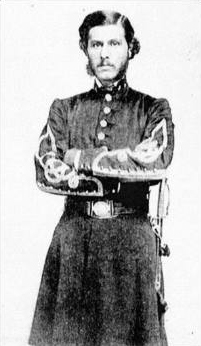
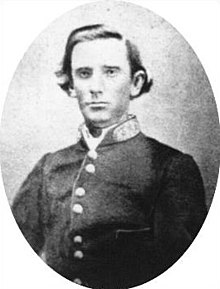
On top is Lt. Enoch Henderson Williams and on bottom is Joseph Green English Williams, both of Company C, 40th Mississippi Infantry. (Photo's courtesy of Danny Jones.)

       One of the saddest stories of the Civil War happened at the Battle of Franklin in Tennessee. Two brothers fought in the same company in the 40th Mississippi Infantry. Enoch Williams was born in 1806 in Georgia. He died one year before the war began. At some point he moved his family to Atalla County, Mississippi. Nothing is known about his wife except her name was Nancy. He had five children, four boys and a girl (some sources state that he actually had six boys and a girl). His oldest son William Williams died two years before the war began at the age of 26. 
       Enoch's second son was named Enoch Henderson Williams. He enlisted in Company E, 18th Mississippi Infantry when the war began. Just after the Battle of Shiloh, Enoch transferred to Company C, 40th Mississippi Infantry where he was commissioned a lieutenant. Enoch's brother Joseph Green English Williams also enlisted in Company E, 18th Mississippi Infantry. It was noted that as the two brothers were growing up, they were inseparable. They both attended Mississippi College together and it quickly became obvious that the younger brother Joseph was the better student. It made sense that they would both join the Confederate Army together. Joseph transferred to the 40th Mississippi with Enoch and was also commissioned a lieutenant. 


Private Columbus Marion Williams (Photo courtesy of Danny Jones)

       Another brother Columbus Marion Williams joined Company E, 18th Mississippi Infantry and records show that he got sick, was sent home where he died. Family sources say he was severely wounded at Gettysburg and was captured. When he was exchanged he was sent home to Mississippi to recuperate. According to the family, he died of gangrene in the still unhealed wound in 1870 at the age of 25.
       The source that claims there were six brothers says five of them died in the war and only Columbus survived. The names of these brothers or where they possibly served and died are not known if they even existed. 
       The story becomes much more melancholy. At the Battle of Franklin, Enoch and Joseph were still lieutenants in the 40th Mississippi Infantry in Winfield Featherston's Brigade. They went into the assault on the right flank of the Confederate Army having to fight their way past an Osage abatis. At some point in the fight, Enoch was shot in the stomach and Joseph was severely wounded in the arm. They were found the next morning, both had deceased, both holding the other brother's wound attempting to staunch the flow of blood. Each had tried to save his brother's life over his own. 
       They were probably buried together, the Confederate dead were placed in the ditch outside the earthworks. Later, Carrie McGavock of the Carnton Plantation had these men exhumed and placed in the Confederate Cemetery behind her house. Enoch was recognized (probably by something written in his pocket), however Joseph was not. Enoch rests in the Mississippi Section of the Confederate Cemetery in grave number 3. Joseph rests in an unmarked grave either in the Mississippi Section or the Unknown Section of the Cemetery. We can only hope they are buried near each other. Enoch was 27 and Joseph was 24. 
       The only information I could find about the one surviving sibling was Nannie Elizabeth Williams married a man named Johnson. I couldn't find any information on whether they ever had any children. Nannie died in 1911 at the age of 62. She rests today in Elmwood Cemetery, Memphis, Tennessee. The story becomes even sadder when you realize that the only chance for the family line to continue was through Columbus. He married Francis "Fannie" Elizabeth Sallis. They had two children, one child which was born dead in 1868 and a daughter born in 1869 named Elma Marion Williams. Unfortunately, she died at the age of three. Fannie lived until 1926. All four rest today in Sallis Cemetery, Sallis, Mississippi. 


Monday, January 23, 2023

Another Civilian Death: James W. Jackson


James W. Jackson

       James W. Jackson was 38 years old when the Civil War arrived at his front door. James lived in Alexandria, Virginia just across the river from Washington, D.C. He was the owner and operator of the Marshall House Inn. Before Colonel Elmer Ellsworth and his 11th New York "Fire Zouaves" arrived at his inn, he was already semi-famous. James flew the Confederate (1st National) Flag atop his hotel which was clearly visible from Abraham Lincoln's office in the White House. 


James Jackson's Marshall House

       Lincoln and his cabinet had observed the large Confederate flag flying across the Potomac River and discussed it. James Jackson had been quoted as saying they would take down his flag over his dead body. When Virginia voted to secede from the union, the following day, Federal troops occupied Alexandria. Ellsworth immediately entered the Marshall House and asked a boarder about the flag. The boarder had no knowledge of the flag. Ellsworth then climbed the stairs and removed the flag from the flagpole. While making his way down the stairs, Ellsworth met James Jackson carrying a double-barreled shotgun. Jackson shot Ellsworth in the chest at close range killing him instantly. He missed with the second barrel as he shot at a Private Brownell. Brownell shot Jackson in the face and then repeatedly bayonetted his body before throwing him down the stairs. 


Private Francis Brownell (above left) and Colonel Elmer Ellsworth

       Both sides considered each man a martyr and hero. No one seemed to question the legality of soldier's employed by the Federal government trespassing and removing private property. James Jackson left behind a wife and three children ranging from ages six and twelve years old. He rests today in the city cemetery, Fairfax, Virginia. Elmer Ellsworth was 24 years old and had never married. His only brother Charley had died the year before of smallpox at age 18. Both rest today in Hudson View Cemetery, Mechanicsville, New York. 


Friday, January 20, 2023

The Sad End to William Bruce Mumford


William Bruce Mumford

       It's bad enough for a soldier to die in war, but when civilians are killed it's worse, especially when that civilian is executed. William Bruce Mumford was one of those civilians. He was forty-one years old when the Federal Navy arrived in New Orleans, Louisiana. He'd served the United States in two previous wars. He'd fought in the Seminole War and was wounded in the leg during the Mexican War. He would walk with a limp for the remainder of his life. Mumford made no bones about where his loyalty lay in the upcoming conflict and would have served the state of Louisiana had he been physically capable. 
       From the USS Pocahontas a Captain Morris and several U.S. Marine's marched to the mint in town and removed the Confederate flag and replaced it with the U.S. flag. He did this without orders, the town itself had not yet been surrendered. A crowd soon arrived and became enraged over this act. Captain Morris notified them that removing the U.S. flag would result in them being fired on by the warship. Seven men, including Mumford decided to remove the flag anyway as it had been placed there illegally. The ship did indeed open fire on the seven men, but only Mumford was wounded by a flying piece of brick. Mumford limped to the mayor's office to present him the trophy, but the angry mob tore it to shreds as he went there. Upon arrival, there wasn't much of it left. 
       When the Federal Army finally arrived three days later, Union General Benjamin "Beast" Butler heard about the incident and demanded that Mumford must pay for this "crime." He ordered Mumford arrested and tried before a military court on charges of "high crimes...against the laws of the United States. Of course, he was found guilty in this "kangaroo court." It mattered not that the city wasn't even occupied or had surrendered when he removed the flag. It mattered not that he had served the United States as a soldier in two previous wars. Butler was basically judge and jury. He ordered Mumford to be hanged, but was kind enough to allow Mumford to decide the spot he would die. Mumford chose to be executed in the courtyard of the mint where the so-called "crime" had occurred. 
       Mary Mumford, William's wife asked General Butler to visit her and he complied. Despite the pleading of Mary and the children, Butler refused to save the man. Despite repeated pleas from different citizens, Butler remained unmovable on granting clemency. 


The Site of Mumford's Execution

       Butler allowed Mumford to say a few words before his execution. He proclaimed his devotion to the Confederacy, but he also spoke of his love for the U.S. Flag and what it's original meaning before it waged an unconstitutional war against weaker states. He proclaimed his love for the original U.S. Flag and his support for it through two of it's wars. After he was hanged, Louisiana Governor Tom Moore called him a hero. His body was left hanging in front of the mint for almost an hour. General Robert E. Lee demanded of General Henry Halleck why a civilian was hanged for removing a flag before a city had officially surrendered. President Jefferson Davis went a step further. Due to Butler's proclamation which basically called all New Orleans women "ladies of the night" and Mumford's hanging, he ordered that Butler was to be treated as a war criminal and if captured to be executed on the spot without a trial. 
       There is a funny irony to this part of the story. Prior to the presidential election of 1860, Butler believing that a moderate candidate could save the Union, had nominated Jefferson Davis for president fifty-seven times to no avail. Years later, Butler would arrange a job for Mumford's widow in Washington, D.C. Mumford was originally placed in a vault in Cypress Grove Cemetery, but he rests today at the foot of a Confederate monument in Greenwood Cemetery, New Orleans, Louisiana. He left behind a wife and five children ranging from age's five to thirteen. 


Mary Mumford


Mumford's Grave


Monday, January 16, 2023

A Tale of Two Brothers


Lieutenant Nicholas "Nick" A. Caufield

       The Caufield brothers lived in New Orleans, Louisiana when the Civil War began. The oldest Nick worked as an accountant. His younger brother William worked as a clerk. Both enlisted in Company F, 5th Louisiana Infantry which was sent for service in Virginia. Nick was elected lieutenant, while William served as a private. Nick was absent back home in New Orleans from November 1861 until February 1862 where he was recruiting for the regiment. 
       Not a lot is known about the two between February of 1862 and the Battle of Sharpsburg (Antietam) in September of 1862. We know they were both present for 2nd Manassas and Chantilly. It was at Sharpsburg in Maryland that the brother's, serving in Brigadier General Harry T. Hays's Louisiana Infantry Brigade, were posted in the "Bloody Cornfield." It was there that Hays had his men lie prone on the ground because of all the incoming artillery fire. 


Private William Caufield

       As they lay on the ground, William lay in front of his brother, reclining on his elbow and talking to a Lieutenant Gubbins. A Lieutenant Fitzpatrick beside them was wounded and Nick asked if he was hit. A moment later a shell struck hitting William passing completely through his body. The same shell cut off one of Private Fitzsimmons's legs, then cut off both of a Private Jenkins feet before striking Nick in the lower part of the back and exiting his chest. Nick's heart was torn from his chest. One Federal shell had killed Nick Caufield, William Caufield, and Private Fitzsimmons and wounded Private Jenkins. 
       The burial location of these three men are unknown, probably originally buried on the field and possibly removed to a cemetery later. Nick Caufield was 26 years old. His brother William was just 21. 


Sunday, August 2, 2020

The Baptist Interpretation of the Bible

Will Dismukes - Ballotpedia

Alabama State Representative Will Dismukes

       I'm so happy that I'm not a Baptist. It seems their "politically correct" version of the Bible doesn't read like everyone else's. Will Dismukes went to a party celebrating the birthday of Confederate General and hero Nathan Bedford Forrest. The democratic party can't fathom why he did this, but the truth is, their party has no hero worth mentioning in the same sentence with General Forrest. You expect such ridiculousness from the democrats because they will use anything for a vote. The Baptist Church shouldn't have surprised me either. 
       In case you are wondering why I'm blaming the Baptists, they forced Will Dismukes who happens to be a Baptist preacher to resign because of his attending the Forrest party. Now why would the Baptist church do this? After all, doesn't the Bible teach forgiveness. Following the war, General Nathan Bedford Forrest became a member of the church and asked for forgiveness for all of his sins. According to the Bible, God forgave him of those sins, but the Baptist church obviously doesn't forgive. 
       For anyone who would like to know the truth about Forrest's salvation, I highly recommend the book called "Nathan Bedford Forrest's Redemption" by Shane E. Kastler. Mr. Kastler is amazingly a Baptist preacher, although once that denomination finds out about the book he's written, he'll probably be forced to resign. Mr. Kastler did some painstaking work tracing General Forrest's entry into the church and according to the Baptist General Forrest was saved. Now what will all these modern day Baptist do if they were to meet General Forrest in heaven. I suppose they will resign and ask God to send them elsewhere. 
       Let us look at a few Bible verses the Baptist need to read and learn. In Luke 6:37 Jesus says, "Judge not, and you will not be judged; condemn not and you will not be condemned; forgive, and you will be forgiven." Again from the book of Luke, 17:3-4 Jesus says, "Be on your guard! If your brother sins, rebuke him; and if he repents, forgive him. And if he sins against you seven times a day, and returns to you seven times, saying, 'I repent,' forgive him." 
       In Mr. Kastler's book, General Forrest confessed his sins and asked for God to forgive him, yet the Baptist refuse to accept this. They should try reading 1 John 1:9 it says, "If we confess our sins, He is faithful and righteous to forgive us our sins and to cleanse us from all unrighteousness." Matthew 6: 14-15 Jesus says, "For if you forgive others for their transgressions, you heavenly Father will also forgive you. But if you do not forgive others, then your Father will not forgive your transgressions." 
       I happen to have a friend who is a Baptist preacher, although I'm not sure which sect he is a part of, but I happen to know he thinks like Will Dismukes and forgives those who have asked for forgiveness. So please don't think I'm bashing all Baptists, but it seems the main leaders of that church are so politically correct they choose to please men over God. I would like one of them to explain to me how Will Dismukes deserves to be treated the way he was for celebrating the birthday of a man who completely changed his life and asked his Savior to forgive him his sins, yet they refuse to. 
       

Tuesday, July 14, 2020

Christy S. Coleman and the American Idiocracy: If you'll follow...


Christy S. Coleman (the all knowing obviously)

       I recently agreed to a debate with Christy Coleman, even against her and her minions, by myself. Who won, well, I'll let you decide. Christy chose to debate me in private and left her minions out of the parts that didn't suit her agenda. Therefore, it was all Christy and her minions in public, but was it all Christy during the debate? I'll let you be the judge. According to Christy and her minions, she is the foremost expert on the American Civil War and it is all about the most "Holy" north versus the "Evil" South. Before debating Christy, I had no idea that the "holy" north only agreed to have slaves prior to the American Revolution as a means to appease the South (that's right, holy northern states embraced slavery as a means to kiss a Southerners ass according to Christy, this one truly cracks me up). You heard me right, her most "holy" north hated slavery, but accepted it to appease the Southern states, and according to her minions, she is the genius on that time period. All bow to the great Christy Coleman, the expert (in her own mind) on slavery all the way back to father Abraham, Useless Grant or anybody else who owned slaves. It's all the South's fault, right Christy?
       Hey, you Christy followers, you need to line up and drink her Kool-Aid, don't ask what's in it, you don't have the intelligence to understand what she is serving, just drink it, you idiots. Don't worry, Christy has BLM and the NAACP on her side, who cares about the truth when it comes to our nations history. She has the Federal government giving her and her self-righteous group 10 million dollars a year, how much do the rest of us get from the government. Oh, that is right, we just pay in, Christy just withdraws, welcome to the idiocracy of 2020. Pay these idiots to do the thinking, let the government take all your money and give to these idiots so they can get a vote. Oh, Christy told me that we agreed on most points except the war was only about slavery. The Federal government loved the African race and believed in what the constitution preached so much, that they went and wiped out the American Indians just ten years after freeing the Africans and declaring all men are equal. In this "shit-poor" country, all men are created equal as long as you have enough of your race to count in an election. Welcome to the world of Christy Coleman and her ignorant minions. 


Thursday, July 9, 2020

The Reckoning

Col George Colbert (1744-1839) - Find A Grave Memorial

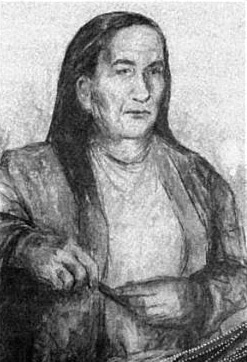
Chickasaw Chief George Colbert

       For those of you who have forgotten another race of mistreated people, allow me to introduce you to the Native Americans. You don't see anything about them on CNN or any other news channel because there are only a million of them left. There aren't enough of them to count in an election, therefore their lives don't matter. You rarely hear them crying about the hand their ancestors were dealt, although they have far more right to be offended today. Can you imagine what this country would look like if the government caved in to the things that offend these people. 
       You won't see large groups of ignorant misinformed white people bowing down to worship or beg for forgiveness to these people because the television doesn't teach these weak minded people to do so. Isn't it amazing how a small box plugged into the wall of a home can completely brainwash the weak minded. That box controls American lives because it takes energy to think for one's self. It's much easier to let the box do our thinking for us because we don't want to expend any energy using our brains. 


Only one race matters anymore

       I happen to be a Christian and you will not find me bowing to any man, ever. I will take my knee to my Father in heaven. Laugh all you want, but I'm not worshiping a race of people because a box plugged into the wall told me to do so. I can think for myself and I have the energy to do so. 
       My upcoming book is called "The Reckoning" and it is about the Cherokee and Chickasaw tribes battling the encroaching Europeans in the American South. The struggle was a long and bloody one between two fiercely militant races, the Native Americans and the Celtic people of Ireland and Scotland. Most Southerners alive today have a mixture of Native American and Celtic blood flowing through their veins. I'm reminded of a repeated story from lots of my friends who've served in the U.S. Military. Drill instructors to this day will repeat the fact that they'd prefer to have a unit of Southern soldiers over northern soldiers any day. 
       Among the warriors I cover in my book are a couple of fierce chiefs named Doublehead (Cherokee) and George Colbert (Chickasaw). Both fought valiantly for the land they'd always lived on, only to be cheated out of it by encroaching Europeans. It reveals a group known as long hunters led by the famous Thomas "Bigfoot" Spencer who stood six feet, five inches and weighed almost 300 pounds. The Alabama version of Davy Crockett named Sam Dale who happened to be an Indian fighter, but also became close personal friends with Chief Doublehead. I was slightly reprimanded for not proclaiming a hero and an antagonist in my book, but I wanted the reader to figure out for himself which side was correct in that war. 
       The way things are headed today, that part of our history may be erased from our history books and there may be another race placed in their place as having things so much worse. Maybe I stated that a little too late, because I'd say we are already there. 

Thursday, June 4, 2020

Police and the Law

What we know about Derek Chauvin and Tou Thao, two of the officers ...

       I support Confederate veterans and because of that I have repeatedly been called a racist. People have stated that I support the idiot that killed George Floyd. Believe me, there is no love lost for this police officer. I don't think he deserves jail time, just announce to the public where he will be released and drop him off there. Justice will quickly be served. Trust me, you don't have to be black to have problems with some of these "Clint Eastwood" police officers. They tend to forget they work for us and are there for us. I've heard that George Floyd was on drugs, etc, but does this give a civil servant the right to kill him? This is not the kind of America the founding fathers envisioned when they formed this government. 
       Having explained to everyone my personal feelings on the matter, I would like to explain what we have serving as police officers in this country. During the recent shut down of the state of Alabama, Huntsville Police took action against a salon for operating without being an essential business. Three such businesses were cited. Now fast forward to when the shutdown is over and look at the city of Birmingham, Alabama. A Confederate monument was attacked and damaged against state law by rioters and the police are too afraid to intervene. Oh, they are a cocky bunch against hair dressers and store owners, but when they face a real challenge, they are nowhere to be found. Doesn't that remind you of the bullies you faced in school. They are extremely tough when they face the weak, but when they face a challenge, they always back down. Welcome to our police force today. Scared of their shadows unless they outnumber their opponents five to one. 

Image may contain: 1 person, smiling

Tuscumbia Prosecutor Hal Hughston III

       Let's take this all a step further. My mom was in city court in Tuscumbia, Alabama and asked for a trial. (City courts in Alabama are make believe courts to obtain these small towns money and that is all they are concerned with). The prosecutor named Harold Hughston III had been through a rough day (according to him). I was representing my mom because she was almost deaf and couldn't hear. He instructed me to inform her that there would be no trial, she was going to pay the court cost and be done with it. I told him that she wanted a trial and that was her right under the U.S. Constitution. He replied, "I already told you, there is not going to be a trial, I've had a long day!" I began to argue with him when he turned to the city judge named John Kennemer (a local lawyer) and instructed him to throw me out of the courtroom. I don't know what Kennemer said because I turned and headed for the door. Just before reaching the door, a Tuscumbia police officer pushed me in the back almost sending me through the glass doors. This officer is one of those police officers like Derek Chauvin and believes he is the next Dirty Harry. His name is Steve Higginbotham and he is the type who wears his uniform about five sizes too small so he can show off his muscles. My dad always referred to him as Tuscumbia's version of "Barney Fife." We all know his type. 

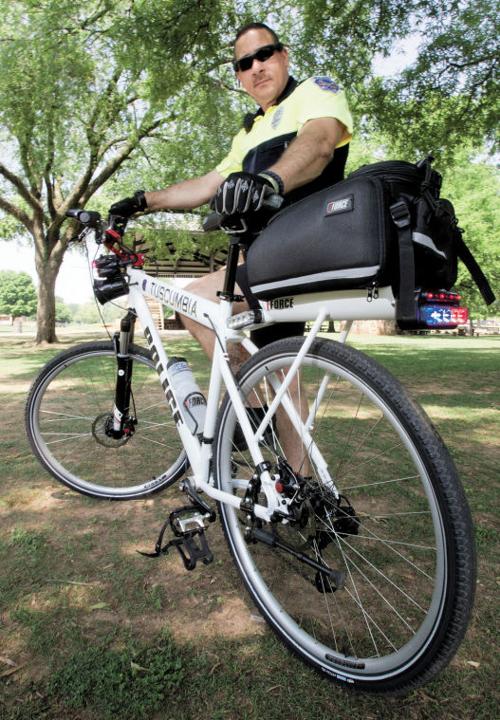
Police upgrade bicycle patrol | Archives | timesdaily.com

Officer Higginbotham the "badass"

       I know nothing about this super cop with the enormous ego who works in this small town and probably makes little more than minimum wage, but I've been told many rumors about him. None are very appealing. I was told he had been a New York police officer by a volunteer firefighter near town and he couldn't cut it there, so he had to come to Tuscumbia, Alabama to get a job. I have no idea and I don't care. Everyone in the area refers to the Tuscumbia Police Department as America's version of the Soviet police. They heard a rumor that someone was growing marijuana on Colbert Heights Mountain outside of their jurisdiction and they got all dressed up in combat gear and raided this man's farm to no avail. They also traveled west about fifteen miles to Cherokee, Alabama to write a ticket to the mayor's wife for driving a golf cart on the street. It sounds like they have little to do. Another citizen of the town of Cherokee had an arrest warrant over some small affair. He didn't know he had this warrant. He was pulled over and handcuffed by Tuscumbia Police and then beaten up. He was on crutches with a broken leg because of these super cops, yet there was nothing he could do about it. They are extremely tough when they have someone handcuffed or alone and outnumber their opponent, the rest of the time, you won't see them. Another episode occurred a little over a year ago when they were going to arrest a man named Howard. They shot his house full of tear gas and one of the canisters caught the house on fire. They then told the media that he started the fire himself. Remember Waco? We've heard this story before. So, who do these super cops answer to? Nobody, because, just like in my case, the mayor Billy Shoemaker sent my dad to the city prosecutor Kennemer for a copy of the video. Kennemer sent dad back to the mayor and the mayor sent dad back to Kennemer. Kennemer informed my dad that he couldn't release the video because he was instructed by the mayor not to and he had to work for these people. Enough said. When are we going to stand up to these overbearing, thieving local and state governments. All they want is for us to give them our money and shut up. 


Sunday, May 31, 2020

John Selden Roane: A Governor With No Military Talent

 John Selden Roane

John Selden Roane

       John Selden Roane was born in 1817 in Lebanon, Tennessee. He was the nephew of Archibald Roane a governor of Tennessee. Roane attended college at Cumberland College in Kentucky and at age twenty moved to Arkansas where his brother lived. He was elected to the Arkansas state legislature. When the Mexican War began, he raised a company and became its captain. Although he had no military experience, he was soon promoted to lieutenant colonel of an Arkansas regiment. Roane was a likable and intelligent man, but was called too lazy to ever succeed in military service. The regiment performed so poorly at the Battle of Buena Vista that the regiment wasn't used in combat again. 
       Roane made an enemy during his time in the regiment. Albert Pike commanded a company in the regiment at the time and he resented the fact that Roane had been promoted to lieutenant colonel. He felt like he was more qualified for the position. After the war, back in Arkansas, Pike began to spread stories about Roane's handling of the regiment during the battle. This eventually resulted in a duel between the two men. Both men fired twice, missing each time and then agreed to stop the duel. In 1849, Roane was elected as Arkansas's fourth governor. Evidently the stories of his performance in the Mexican War didn't affect how the voters felt about him. 
       When the Civil War began, Roane was against secession, but sided with his adopted state and received a promotion to brigadier general during the spring of 1862. He took command of a brigade in Van Dorn's army and was ordered to Corinth, Mississippi, but was soon sent back to Arkansas to defend the state from Samuel Curtis's invading force. He managed to harass Curtis enough to save the state. Thomas C. Hindman soon replaced Roane and took his troops. This turned Roane against Hindman. Soon the entire department was in an uproar as Roane was frustrated at Hindman, Hindman was quarreling with Pike, and Roane arrested Pike for Hindman. All that was accomplished was severe fighting among the commanders of the department. 
       Roane led a brigade at the Battle of Prairie Grove and Hindman praised his performance there. Yet, Hindman was forced to break up Roane's brigade because of desertions in his Texas regiments. Roane was the number three ranking general in the department and many feared that if something happened to Holmes and Price, Roane would command all the forces. Although he'd done a fairly good job in his Civil War actions, everyone feared for him to command the forces in Arkansas. He was given an infantry brigade in late 1864, but saw little action for the remainder of the war. 
       John S. Roane died at the age of 50 in Pine Bluff, Arkansas in 1867 and rests today in Oakland Cemetery, Little Rock, Arkansas. There were many generals in the war that were far worse than General Roane, but today most historians claim that Roane was disliked by his troops and his superiors. They call him a politician with no military talent. His record, though limited, shows him to have been fairly successful in all of his endeavors. 

Picture of

Grave of Governor/Brigadier General John S. Roane

Thursday, May 28, 2020

Clement Hoffman Stevens: "Rock"

Clement Hoffman Stevens (1821-1864) - Find A Grave Memorial

A Pre-War photograph of Clement Hoffman "Rock" Stevens

       Clement Hoffman Stevens was born in 1821 in Norwich, Connecticut. His father (a Southerner by birth) was serving in the United States Navy at the time. While a child, Stevens family moved to Florida. When the Seminole War began the family moved to Pendleton, South Carolina (his mother's place of origin) for a safer environment. Like his father, Stevens also joined the Navy and served under two officers that were relatives of his. He married the sister of future Confederate generals Barnard E. Bee and Hamilton P. Bee. 
       Stevens didn't remain in the Navy long before entering the banking business in Charleston, South Carolina. When the Civil War began, Stevens dove into military studies and became an expert on Civil War ordnance. He was already a colonel in the South Carolina Militia when the war began. Stevens built a battery in Charleston Harbor using railroad iron to protect his gunners. He then traveled with his brother-in-law Brigadier General Barnard E. Bee to Virginia where he served as a staff officer during the Battle of Manassas. His brother-in-law was killed during the fighting there while Stevens was seriously wounded. 
       He returned to Charleston and took command of a militia regiment. He and Ellison Capers raised the 24th South Carolina Infantry. Stevens would become their colonel and Ellison Capers was made his lieutenant colonel. Both men would become general officers by the end of the war. He led the regiment in the Battle of Secessionville where he stopped the Federal attack. He remained on the east coast for the next year. During the spring of 1863, his regiment was assigned to Brigadier General States Rights Gist's brigade and sent to Jackson, Mississippi to assist Joseph Johnston's army relieve besieged Vicksburg. Johnston failed to move in time to assist Pemberton and soon Vicksburg was forced to surrender. Gist's brigade was then sent to the Army of Tennessee and fought at the Battle of Chickamauga. A funny incident occurred before the battle. While the battle raged the first day, Gist's brigade was stranded in Rome, Georgia because a railroad engineer was sleeping. Stevens was so angry that he threatened to shoot the man. Stevens had two of his men fire the boilers of the locomotive and forced the engineer to drive them to the battlefield at gunpoint. 
       At Chickamauga, he was severely wounded again and had two horses killed beneath him. His division commander William H.T. Walker called him "iron-willed" and recommended him for promotion for his gallantry as a leader in combat. Colonel Clement Hoffman Stevens became Brigadier General Stevens in January of 1864. He was given command of W.H.T. Walker's old brigade when its new commander Brigadier General Claudius C. Wilson died of fever. His brigade participated in the Atlanta Campaign but saw limited action. General Stevens earned the nickname "Rock" at this time from his troops for his steadiness under fire. Stevens was upset at the replacement of Joseph E. Johnston before the engagements around Atlanta.
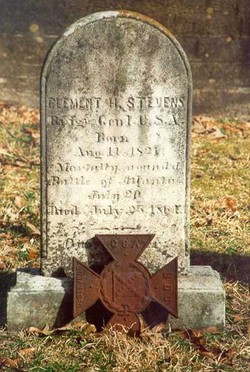
       In the first battle for Atlanta at Peachtree Creek, Stevens was leading his brigade on horseback in a charge against Federal breastworks. Sources conflict each other about whether he was hit by a bullet or artillery fire. Either way, he was struck in the head by a projectile that fractured his skull behind his jaw. While being carried from the field by two officers, they were also shot. Stevens was carried to Macon, Georgia where surgeons removed what they called a bullet and bits of bone. General Stevens died on July 25, 1864. He rests today in St. Paul's Episcopal Cemetery in Pendleton, South Carolina along with his brother-in-law General Barnard E. Bee. General Stevens was 42 years old. His wife Ann had died two years earlier and he left behind two sons. 

Picture of

Grave of General Stevens

Thursday, May 21, 2020

Frank Crawford Armstrong: The General Who Fought For Both Sides

Frank Crawford Armstrong.png

Brigadier General Frank Crawford Armstrong

       Many soldiers fought for both sides during the war, but you hardly ever think of a general officer as having done so. You'd be wrong. Frank Crawford Armstrong was born in 1835 in Choctaw Territory in what is today known as Oklahoma. His father Francis W. Armstrong was an American army officer posted there at the time. Unfortunately, Frank would not remember his father because he died three months before Frank's birth. Frank's widowed mother soon married Mexican War General Persifor F. Smith. At age 19, Frank accompanied his step-father into New Mexico to fight Native Americans. His performance there earned him a commission in the United States Army as a lieutenant without him having to attend West Point. 
       After this campaign into New Mexico, Armstrong attended Holy Cross College and got his degree. He retained his commission in the army and served under Albert Sidney Johnston during the Mormon Campaign in what was labeled the Utah War. When the Civil War began, Armstrong was made a captain in the Federal Army and led a company of cavalry at the Battle of Manassas. On August 10th, just two weeks after the embarrassing Federal defeat at that battle, Armstrong resigned his commission and joined the Confederate Army. He served on both the staffs of Ben McCulloch and James M. McIntosh, both generals being killed at Pea Ridge. Armstrong was actually just feet from his commander Ben McCulloch when that officer was killed. He was then commissioned colonel of a Louisiana regiment before taking command of Sterling Price's cavalry. He soon received a promotion to brigadier general.
       At the Battle of Chickamauga, Armstrong served under Nathan Bedford Forrest. He was soon given a brigade of Mississippi cavalry under Stephen D. Lee and served in Mississippi before joining the Army of Tennessee during the Atlanta Campaign. He served under Forrest during Hood's invasion of Tennessee and helped Forrest cover the retreat of the army into Alabama. He was captured fighting under Forrest in defense of Selma, Alabama. His military career was over. 
       Following the war, he served in the mail service in Texas, became an Indian inspector, and eventually became Assistant Commissioner of Indian Affairs. He died in Bar Harbor, Maine in 1909 at his daughter's house. I actually wrote to the local city historian in Bar Harbor a few years ago and asked her about the address where Armstrong died. She knew of the address, but almost called me a liar when I stated a Confederate general died in her town. Having resigned his U.S. Army commission on August 10, 1861 and joining the Confederate Army, his resignation wasn't accepted until August 13th. This means that Frank Crawford Armstrong served three days in both armies during the war. Frank Armstrong was 73 years old when he died and rests today in Rock Creek Cemetery, Washington, D.C. 


Another wartime image of Frank Crawford. (He is ranked colonel in this image). 

Tuesday, May 19, 2020

Daniel Frost: The Confederate General Who Deserted

Daniel M. Frost - Wikipedia

Brigadier General Daniel Marsh Frost

       There were only a couple of the 426 commissioned Confederate generals who were ever accused of cowardice. Daniel Marsh Frost was not one of them, however he is remembered today as the only Confederate general who deserted his cause. General Frost was born in Duanesburg, New York in 1823. He graduated from West Point ranked 4th in the class of 1844. Dan Frost saw action in the Mexican War and was brevetted for gallantry at the Battle of Cerro Gordo. Following the Mexican War, he almost lost an eye in a skirmish with Native Americans in Texas. In 1853, Frost resigned from the U.S. Army and began a career in business that involved both lumber and fur trading. By 1854, he was elected a senator in the Missouri State Legislature. He left the Missouri legislature in 1858 but became a brigadier general in the Missouri State Militia. 
       When the Civil War began, Frost was a supporter of the Southern states and raised Missouri troops for the Confederate cause. He and his recruits were surrounded by Federal troops near St. Louis, his men were marched through the city streets as prisoners and a riot broke out. After being exchanged he was commissioned brigadier general in the Confederate Army on March 3, 1862. He served briefly as a staff officer on Confederate General Braxton Bragg's staff before being reassigned to the Trans-Mississippi Department to serve under Major General Thomas C. Hindman. There he led a division in the Battle of Prairie Grove. In the spring of 1863, Hindman was relieved of duty in Little Rock, Arkansas (mostly for ruling the region with an iron fist) and Frost took command. 
       About five months after he took command of Confederate forces in Arkansas, Federal officials removed his family from their home in St. Louis, Missouri and exported them to Canada. Frost very quickly made a decision to desert the Confederate Army and rejoin his family in Canada. He didn't ask for permission to leave and was listed as a deserter from the Confederate Army (the only Confederate general out of the 426 to ever do so). He wouldn't return to Missouri until late 1865. 
       He spent the remainder of his life attempting to convince pro-Union people that he had not done anything wrong when he joined Confederate forces and at the same time he attempted to convince Southern supporters that he never really deserted. He wrote many articles attempting to explain what happened to him, but when he finally wrote his memoirs, he hardly even mentioned the greatest conflict of the time. 
       He died in 1900 on the outskirts of St. Louis and rests in that city today in Calvary Cemetery. He was 77 years old. No matter how you spin the story, he will always remain one of the most controversial generals of the war. 


Brigadier General Daniel M. Frost in a post-war view

Friday, May 15, 2020

The Tragic Death of Major General John Austin Wharton

JAWharton.jpg

Major General John A. Wharton

       Most people don't understand why people in the South are considered so much more respectful than Northerners. There is a reason for this and it goes way back beyond the Civil War. In the South, there was a code of honor among gentlemen. If you insulted a man, you may find yourself challenged to a duel. I've already written a blog on dueling in the old South if you'd like to read it. http://trrcobb.blogspot.com/2013/05/antebellum-dueling.html There were rules that were supposed to be followed. I read an article a couple of years ago about newspaper editors in the antebellum South. You'll have to forgive my memory, but I remember being amazed at the number of times the average editor was challenged to a duel during his lifetime for something printed in his paper. 
       The most famous duel of the war is the one that occurred between Missouri Major General John S. Marmaduke and Tennessee Brigadier General Lucius Marshall Walker near Little Rock, Arkansas. Marmaduke accused Walker of cowardice and they met at dawn one morning despite orders to refrain from dueling. When it was over, Walker lay dead, never to be called a coward again. The other famous duel of the war occurred earlier in the war when Major Alfred Rhett killed his commanding officer Colonel William R. Calhoun (nephew of John C. Calhoun). 
       Major Wharton wouldn't have the opportunity to defend himself in a duel. Born in Nashville, Tennessee, the Wharton family moved to Texas while he was young. He was described as a "red-haired, freckle-faced boy." John Wharton graduated from the University of South Carolina in 1850. While in that state, he married the daughter of Governor David Johnson. Upon graduation, Wharton returned to Texas where he practiced law. He soon made enough money to purchase a plantation. He was a strong supporter of secession. 
       When the war began, he and other Texans headed to Richmond, Virginia. They saw action at Manasass (Bull Run), but Wharton was sick and missed the battle. He then became a captain in the 8th Texas Cavalry. The unit became known as "Terry's Texas Rangers". Colonel Benjamin F. Terry was mortally wounded at Rowlett's Station and his successor Thomas S. Lubbock became sick and died. John was promoted to colonel of the regiment. 
       At Shiloh, Wharton was wounded, yet he refused to leave the field. He remained in command and helped cover the retreat of the army to Corinth. General William J. Hardee called him "the gallant Wharton." This praise helped stoke the fires of military ambition in Colonel Wharton. He was then placed under command of Bedford Forrest and fought in an engagement at Murfreesboro on July 13, 1862. Forrest commended him for moving forward at the head of his command. He was severely wounded in this assault.
       Wharton recovered in time to lead his regiment during Bragg's Kentucky invasion. He had a horse shot from beneath him at Bardstown and at Perryville he was praised for leading one of the greatest charges of the war. Because of this, he was promoted to brigadier general on November 18, 1862. 
       John Wharton received command of a two-thousand man brigade and joined Joseph Wheeler's cavalry. He was praised by Wheeler and received promotion to major general on November 10, 1863. He continued to serve under Wheeler in the action around Chattanooga. Rumors began to circulate that Wharton was a superior general to Wheeler. These rumors soon reached Wheeler's ears and Wheeler immediately began to complain to General Joseph Johnston about his subordinate. Wheeler stated that ambition had turned Wharton into a "frontier political trickster." 
       Johnston understood something must be done to retain peace among his commanders. Wharton had applied to President Jefferson Davis for a transfer to the Trans-Mississippi (area west of the Mississippi River) and Johnston realized this would solve his problem. Wharton was ordered to report to Edmund Kirby Smith in Texas.
       He arrived there in the spring of 1864 and when General Thomas Green was killed at Blair's Landing, he took command of Richard Taylor's cavalry in Louisiana. Taylor praised his performance, but the Trans-Mississippi didn't receive the attention of the army's east of the river. He soon applied for a return to Johnston's army in Georgia. That transfer regrettably would never occur and John Wharton would die as a result. 
       Fellow Texan Colonel George Wythe Baylor (brother of Colonel John R. Baylor the famed Indian fighter) and John Wharton would have problems. Baylor had served on General Albert Sidney Johnston's staff at Shiloh. Both men were ardent Texans devoted to the Confederate cause. Deep down, they were very different men. Baylor was a self-made man who'd worked hard all his life for what he'd obtained. Wharton was born to wealth and education. More trouble was brewing than just their backgrounds.
       The first incident between the two men occurred when Colonel Baylor on furlough applied for an extension because of his wife's ill health. Wharton had denied the furlough writing, "I know nothing of Mrs. Baylor's health. Colonel Baylor is needed with his regiment." Baylor believed that Wharton was calling him a liar to have his furlough extended. 
       Most people saw Wharton as a future politician careful to look for future votes. Like a true politician, most felt he took care of his friends at the expense of others. General John B. Magruder placed Baylor's cavalry under Wharton's command and soon after asked Wharton for troops to serve as dismounted cavalry. Wharton immediately sent him Baylor's men. This infuriated Baylor. According to Baylor (he'd been commanding a cavalry brigade for some time), Wharton had promised him a promotion to brigadier general and now was forcing him to serve under a lower ranking officer as infantry. For Baylor, it was just too much. 

 In the Confederacy's Last Days, Two Texans Face Off in Futile Feud

Colonel George Wythe Baylor

       The sad part of the episode is the fact that Baylor was placed under a general who wasn't able to take the field which basically ensured him an independent command. Wharton probably saw it in this light. Baylor's pride was hurt and that fact didn't make him feel any better. In his defense, by this point of the war, Baylor was himself in poor health. He'd been suffering from dysentery and had lost a lot of weight. Despite standing six feet, two inches he weighed less than 140 pounds. His brother John R. Baylor was known for his fiery temper and Baylor probably wasn't much better. 
       Wharton didn't help the situation with his language. He was famous for cursing when speaking to his subordinates and talking harshly when he did address them. Things were quickly coming to a climax between the two men. On the morning of April 6, 1865 (just three days before Lee surrendered at Appomattox), both General Wharton and General James Harrison came riding into Houston in a carriage to visit their superior officer Major General John B. Magruder. 
      Colonel Baylor was in town that morning attempting to enlist the help of General Walter Paye Lane in getting his orders countermanded. Lane refused to get involved (especially after the reports of the way Wharton talked to his subordinates). Having failed to receive any help from Lane, Baylor strolled through town with Captain Sorrel. Wharton, riding in the carriage spotted Baylor and dressed him down for being absent from his command. It had to be an embarrassing moment for Baylor being "chewed out" in front of Captain Sorrel and General Harrison. Baylor informed Wharton that it was imperative that he be in Houston to have his men removed from the situation they were in or they would all desert. He then told Wharton he was going to see Magruder to complain about Wharton. The situation began to escalate and both men's voices began to rise. Wharton demanded to know when he'd ever treated Baylor unfairly. Baylor named several instances that in his mind were mistreatment. 
       Wharton called Baylor a "damned liar." In the old South calling someone a liar was just asking to be challenged to a duel. Baylor then called Wharton a "liar" and stepped toward the buggy with his hand raised. General Harrison shocked at the escalating situation nudged the horse forward. Baylor shouted, "Stop the buggy, sir!" Harrison ignored him. The buggy continued down the street with Baylor still shouting at Wharton. 
       Later that afternoon, Wharton and Harrison arrived at Magruder's hotel room to find his commander absent, but Colonel Baylor sitting on his bed awaiting his return. Wharton began to shout at Baylor about his earlier insubordination. Harrison attempted to intervene, but things were out of control. Wharton struck Baylor in the face (Baylor claimed he was punched with a fist, but some say it was an open-handed slap) before Baylor drew his revolver. Harrison was still attempting to get both men under control when Baylor fired under his outstretched arm hitting Wharton in the chest. Wharton was dead when he hit the floor. General Harrison then grabbed Baylor and said, "Colonel, he was totally unarmed!" Baylor simply turned and left the building. He would never be punished. 
       Unlike in a duel, Baylor had killed an unarmed man. In that time period, this would be construed almost like an act of cowardice. Wharton was 36 years old and rests today in the Texas State Cemetery, Austin, Texas. George Baylor would become a post-war Texas Ranger, writer, and serve in the Texas state legislature. He died on March 24, 1916 and rests today in the Confederate Cemetery, San Antonio, Texas. He was 83 years old. Baylor claimed that he regretted killing General Wharton for the remainder of his life calling it a "lifelong sorrow." Those closest to Baylor reported that he couldn't mention the entire affair without coming to tears. He stated, "I trust everyone who knows me personally will believe me when I say the whole thing was a matter of sorrow and regret to me." Baylor is remembered as a military commander as "a courageous individual fighter...lacked reserve, was a poor disciplinarian, and an indifferent judge of men." Both men are remembered for their fearlessness in combat. Wharton is remembered as a fine combat commander. 
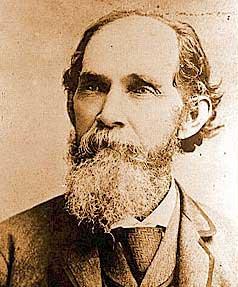
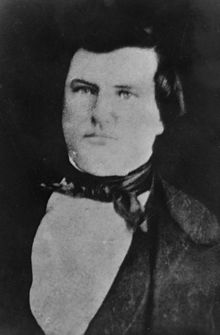
Col George Wythe Baylor (1832-1916) - Find A Grave Memorial

George W. Baylor later in life